


Fr Marco Lazzaron
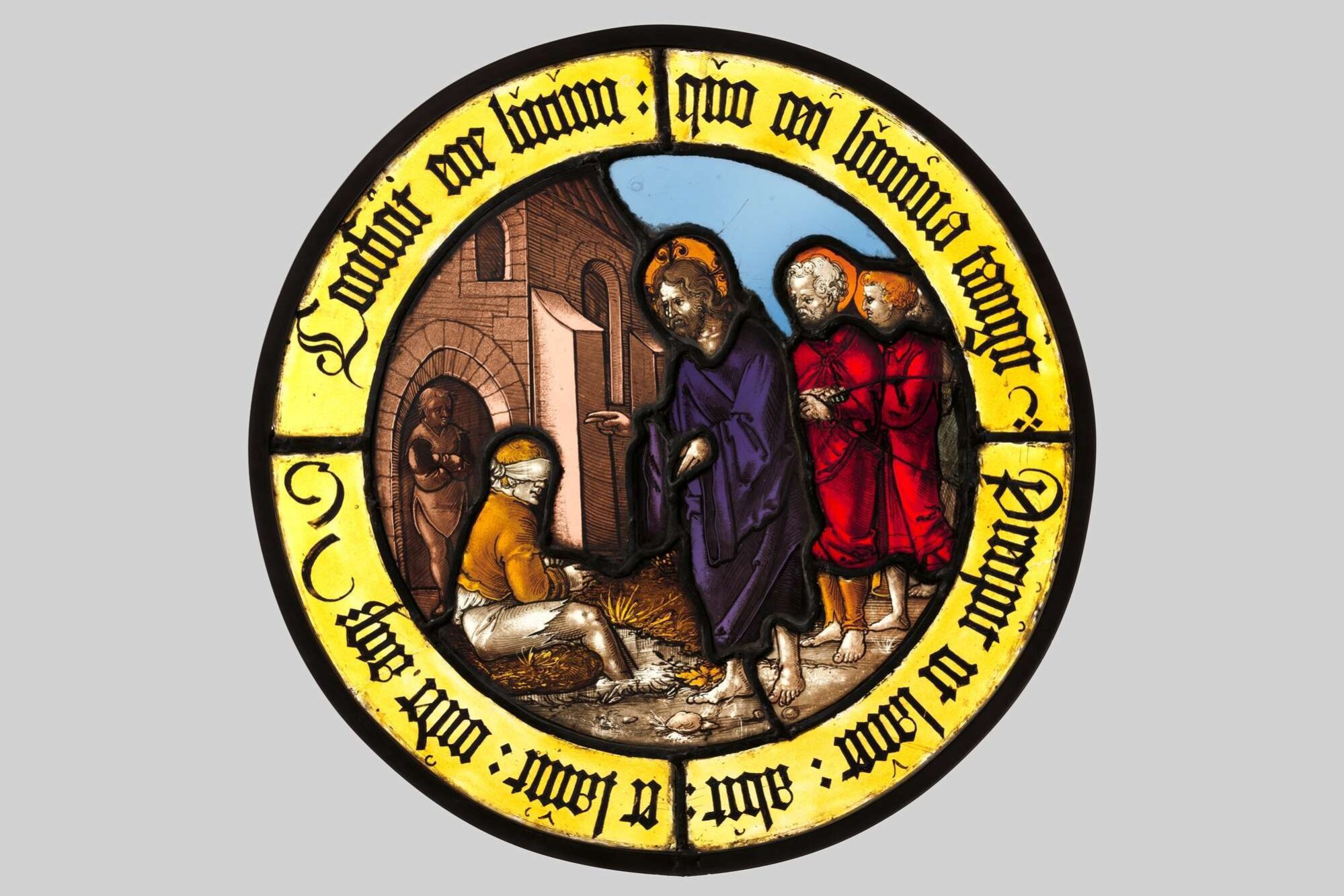
he healing of the blind man of Jericho represents the last miracle narrated in Mark’s Gospel. This story follows Jesus’s three announcements regarding his passion, death, and resurrection. The central part of the Gospel of Mark (chapters 8 to 10), called “the section of the journey”, is framed by two healings of two blind men. In the beginning, we find the progressive healing of the blind man of Bethsaida (Mk 8:22-26). At the end of the section, we encounter the healing of the blind man from Jericho, Bartimaeus.
1. The story has a great symbolic value: Bartimaeus is the mirror of the disciple. Over the last few Sundays, Mark has led us through the itinerary of the apostles. Bartimaeus represents each of us. We all become aware of our spiritual blindness when we are called to follow Jesus on the way of the cross.
2. Bartimaeus knows exactly what to ask, unlike James and John, who “did not know what they were asking”. He asks for the essential through a short prayer: “Son of David, Jesus, have mercy on me!” Bartimaeus expresses his belief in Jesus as the Messiah by calling him “Son of David”. At the same time, he manifests a relationship of trust, intimacy, and tenderness, calling Jesus by name and invoking him as “Rabbuni”, “my master”. Life is born and develops thanks to light (think of the need of light in the created world; plant and flowers need light). The same happens in spiritual life: without inner light, our existence is engulfed by darkness. Sometimes we experience the joy of light, while other times darkness seems to invade our hearts. Problems, suffering, difficulties, and weaknesses cloud our vision of life, making us incapable of following the Lord. In these moments, Bartimaeus’ prayer comes to our aid: “Rabbuni, may I see again!” Bartimaeus is a master of prayer: simple, essential, and confident. He know what his needs are and immediately asks Jesus to be cured.
3. In the ancient Church, the sacrament of Baptism was called “enlightenment.” This enlightenment snatches us from the darkness of death, but it is always threatened. Like the sunflower, every day the Christian turns towards the Sun of Christ. Every morning, while we wash our eyes, our soul needs also to be washed like the man born blind and we need our “pool of Siloam” (Jn 9). And when we find ourselves blind, let us remember that the Eucharist is the eye drops of the Spirit. With the hands that welcomed the Body of Christ, we touch our eyes and our faces, mindful of the experience of the disciples of Emmaus: “Their eyes were opened” at the breaking of the Bread. The eyes and our faces are destined to shine, like that of Moses. The face of the Christian is the mirror of the glory of the Lord (2 Cor 3:18), the testimony of the Light, placed on the lampstand of the world.