



Fr Marco Lazzaron
hrough John’s baptism, Jesus enters the waters of the Jordan. Even more, the voice of the Father pierces the sky to reveal the identity of his beloved Son, his pride and joy.
After this revealing event and the royal investiture with which the Father inaugurates the public ministry of the Son, the Spirit leads him into the desert. This is a reverse path compared to that of the people of God: while Israel first experiences the journey in the desert and then the crossing of the Jordan towards the Promised Land, Jesus first crosses the Jordan and then, “filled with the Holy Spirit”, moves away from the Jordan “into the desert”. The people’s journey in the desert was forty years long; the one of Jesus was forty days long. Certainly shorter, but nonetheless full of meaning.
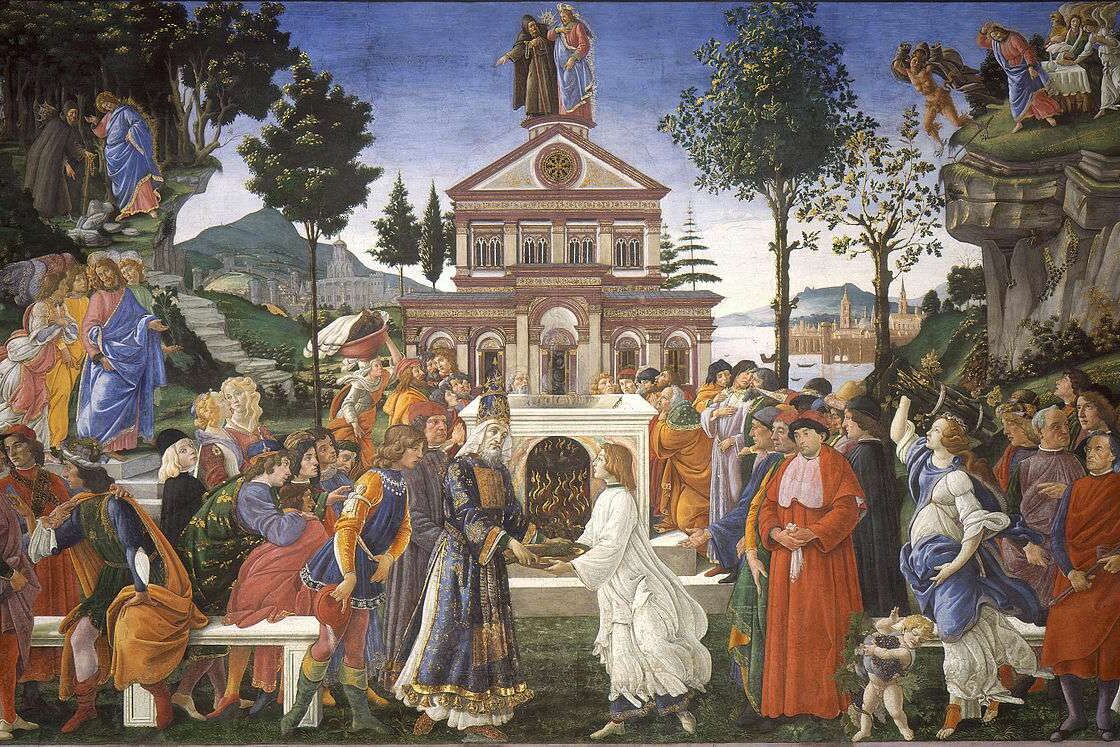
At the end of this time, Jesus feels the pangs of hunger, sympathizing with the hunger of every human being. Jesus is alone and has no allies other than his Father. Moreover, there is someone who takes advantage of this moment of Jesus’ weakness to insinuate doubt about his identity as the Father’s beloved Son. In fact, the devil puts him to the test three times and the refrain is the same throughout the story: “If you are the Son of God…”.
Thus the devil presents hunger as an unacceptable deprivation for the Son of God who has the power to transform even stones into bread. The diabolical temptation leverages the power to act on the identity of created things. Jesus reacts by quoting a passage from Deuteronomy which reflects the wisdom learned by Israel in the desert: “Man shall not live by bread alone” (Dt 8.3). Man’s life is greater than his need for bread.
The tempter then proposes that Jesus prostrate himself before him to worship him and receive from him all the kingdoms of the earth in exchange. It is the temptation of material power that Jesus faces by drawing again from the Book of Deuteronomy: “The Lord your God you shall worship, him only shall you serve” (Dt 6:13).
The third and final diabolical temptation leverages spiritual authority. The devil, quoting Ps 91:11-12, invites Jesus to throw himself down from the pinnacle of the temple, confident in the intervention of the angelic hosts. This time too Jesus responds with a verse from Deuteronomy: “You shall not put the Lord your God to the test” (Dt 6:16).
Jesus rejects diabolical temptations one after the other, going back to Sacred Scripture, not to manipulate and exploit them as Satan does, but to support the primacy of God the Father. The power of the Father is not something that Jesus shows off to demonstrate his abilities, but the engine of that “weakness of heart” or mercy that pushes him to take thoughtful and loving care of his creatures, care that becomes compassion, identification, and tenderness.