


Fr Marco Lazzaron
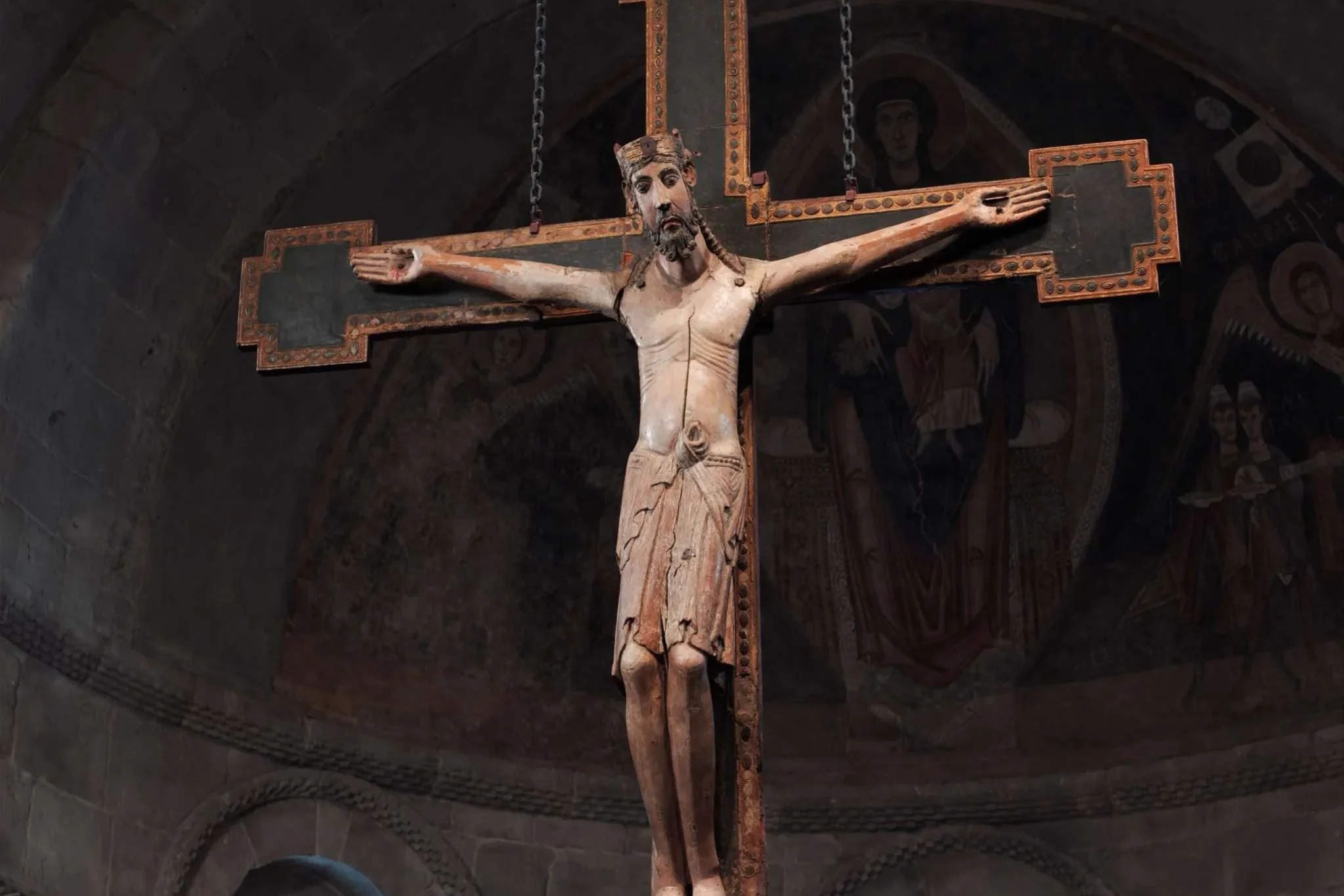
oday is the last Sunday of the liturgical year, Christ the King of the Universe, and the Gospel of today presents to us his “paradoxical” kingship: his throne is the cross, his crown is a bundle of thorns, his jewels are the nails; he does not wear regal garments but is stripped even of his tunic. And yet, precisely in this annihilation, a criminal manages to glimpse a lordship that is not of this world, one that speaks of a kingdom that lies “beyond” the appearance. Yes, in Jesus—this man who continues to pray, to endure, to intercede for his killers—in this disfigured man shines the beauty of a greater love, the dignity of a kingdom that is not of this world. “For the greatness of his kingdom is not worldly power, but the love of God, a love capable of reaching and healing all things. For this love Christ lowered himself down to us, he dwelt in our human misery, he experienced our lowest condition: injustice, betrayal, abandonment; he went through death, the tomb… (Christ) pushed himself to the very edges of the universe to embrace and save every living being. He has not condemned us, he has not even conquered us, he has never violated our freedom, but has made his way with humble love that excuses all things, hopes all things, endures all things”. (Pope Francis).
Yet, it would mean very little to recognize Jesus as King and acclaim him as such if he does not become the King of our own life. The so-called “good thief” offers us a path consisting of three steps: to recognize, to confess, to entrust oneself.
1. Recognize. While all tempt Jesus by telling him to “save himself,” and the other criminal urges him to prove he is the Christ by saving himself and them, the “good thief” recognizes both Jesus’ innocence and his own guilt. He does not allow himself to be carried away by chatter, confused by hearsay or insults. To be able to acknowledge our own failures and call our sins by name is the way to let God reign in our lives. If our “self” is too inflated, if we cannot admit what is wrong, God can find no room in our hearts.
2. Confess. This criminal confesses (proclaims) Jesus and, at the same time, confesses his own faults. “God, as soon as we give him the chance, remembers us. He is ready to wipe out sin completely and forever, because his memory does not record the evil done and does not keep a tally of wrongs suffered. God has no memory of sin, but of us—each one of us, his beloved children. And he believes it is always possible to begin again, to rise again” (Pope Francis).
3. Entrust oneself. This man did not close in on himself but turned to Jesus with trust. He asked Jesus to remember him and experienced the mercy of God. Jesus assures him that he will not only remember him, but will take him with him: “Today you will be with me in Paradise”. This is the One in whom our trust is placed! What should we fear? To let Jesus reign means to give him the steering wheel of our life, to trust in his Word, certain that he cares for us and leads our life toward fulfillment. In this providential light we can be certain that everything—absolutely everything—works together for a greater good.
“Let us then ask for the gift of this open and living memory. Let us ask for the grace never to close the doors of reconciliation and forgiveness, but to know how to go beyond evil and differences, opening every possible path of hope. Just as God believes in us, infinitely beyond our merits, so we too are called to instil hope and offer opportunities to others” (Pope Francis).
PRAYER for TODAY:
“Jesus, remember me when you come into your kingdom”.