


Today we begin the course of readings which will cover the Gospel according to Mark during the season known as Ordinary Time.
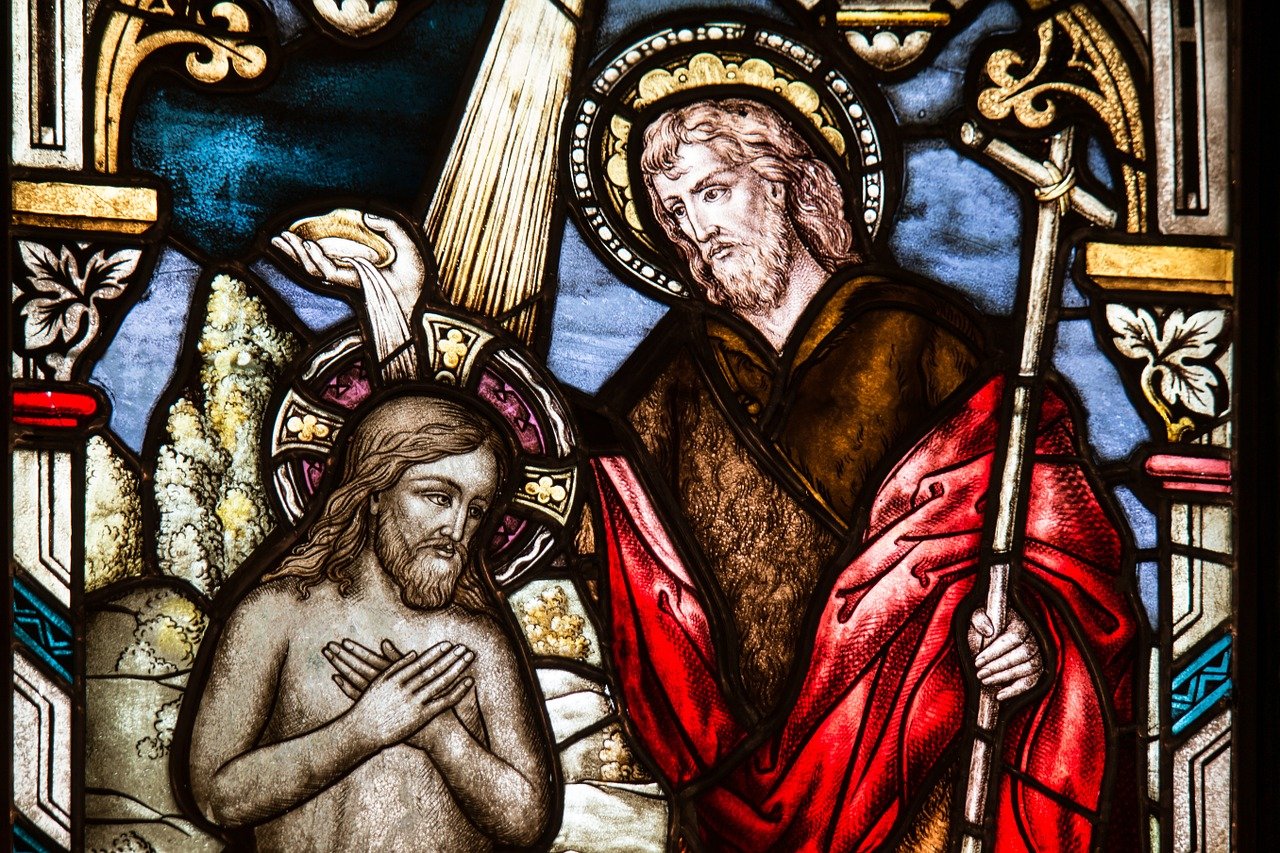
Each of the evangelists has his own understanding of who Jesus is. Mark makes it clear from the first line of his narrative that Jesus is “the Son of God”, and he underlines this in our episode today, in which the divine voice identifies the newly baptised Jesus as “my Son, the Beloved”. This declaration comes to Jesus personally: it is not audible to those others who are present. Thus we, the readers or hearers of the Gospel, are let into the
secret of who Jesus is, but no one else in the story is privy to this information. None of the characters really understands who Jesus is, until the centurion at the cross proclaims that he was indeed the Son of God. The baptism of John the Baptist was a sign of people’s admission of their sins and their desire to amend their way of life. Jesus is showing solidarity with all those who wish to live a decent life, open to the word of God, and it is by identifying himself with such individuals that God reveals who he is and the Spirit comes upon him. We are invited to accompany Jesus in his ministry in Galilee and on his journey to Jerusalem. Mark’s vivid and fast-paced story will challenge us, as well as the persons we encounter on the way, to ask ourselves, “Who is this… ?”
REFLECT
The four Gospel versions are not meant to be simply biographies of Jesus.
They are, rather, statements of the evangelists’ different understandings of the person of Jesus: this is one of the reasons why the four narratives are distinct and present apparently inconsistent versions of the same event or saying of Jesus.
So, for instance, Mark does not include the instruction from the heavenly voice, which says “Listen to him”. The experience here is that of Jesus himself, not of the witnesses round about.The Gospel of Mark was written before the versions of Matthew and Luke: we may find Mark’s presentation more difficult and challenging. We may find ourselves relieved that we are not faced with the same questions that the disciples, for instance, have to confront and how they misunderstand what is happening. As we follow the narrative over the next weeks, Mark is inviting us to put ourselves in the shoes of the people whom Jesus meets and to ask ourselves what we would do in their situation.
The scriptures are the word of God, alive and active and confronting us today. This may sound like something alarming, but we might remember the first line of Mark’s Gospel version, that it is “Good News”. The fact that we begin with Jesus showing solidarity and identifying himself with those people who are open to the word and willing to examine their lives and amend them where necessary is a sign of hope for us all. Also, we might remember that at our baptism, we received the Holy Spirit, which tells us that we are given the power to live as disciples of Jesus.
SAY
Jesus is God’s beloved Son.
LEARN
Mark’s version of the Gospel is the oldest, written probably about AD 70 in Rome.The symbolism of the dove in the story is obscure; its meaning is not clear.
Jesus’ being baptised is a sign of his solidarity with sinners.
DO
Take an afternoon and read through the whole of Mark’s Gospel version, preferably at one sitting.