



Fr Marco Lazzaron
nlike what many believe, in the light of the Gospel, money and other material goods are not evil in themselves. It’s true: from money can derive many injustices; but they can also be the fruit of honest work that is fairly remunerated. They can be used as a tool to damage other people but also to help them.
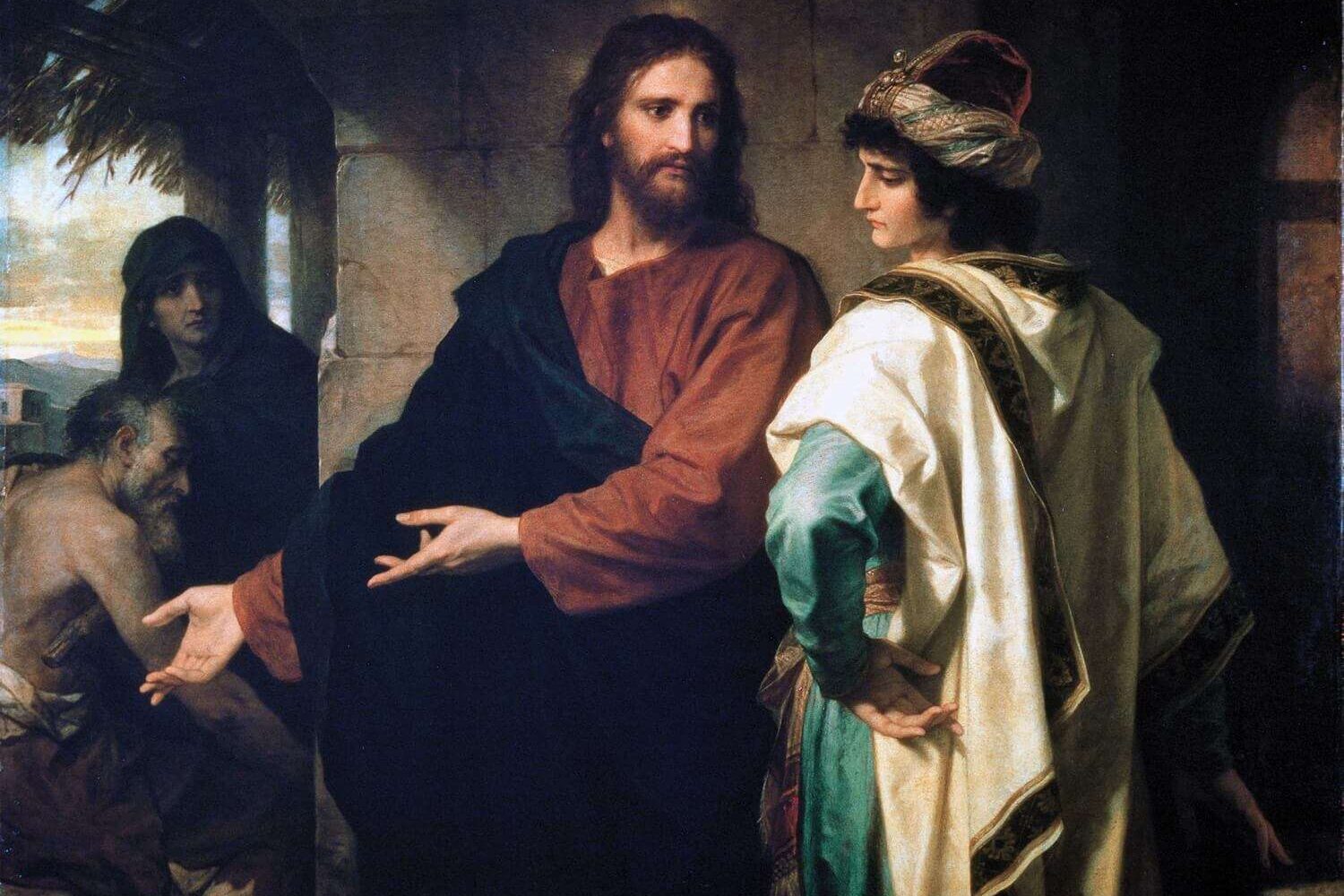
Evaluating in a correct way the material goods we have is the topic of today’s gospel. A man, well endowed with riches but also with faith and indeed willing to get spiritual perfection, asks Jesus what he must do to have eternal life. “Keep the commandments”, Jesus replies and, when he already does so, he adds: “You lack only one thing: Go, sell what you have and give to the poor, and you will have treasure in heaven; and come! Follow me!” The invitation is not happily accepted: “he, saddened by those offspring, went away afflicted, because he had many possessions”. Jesus comments on the event with this saying: “It is easier for a camel to pass by the eye of a needle than a rich man enters the kingdom of God”.
On the teaching of the Gospel about the value of riches, this episode must be integrated with others, to understand that those who possess or desire riches are invited to detach themselves from them, but what matters more than actual detachment is emotional detachment. Those who, despite not having material goods, are anxious and anxious to acquire them, and to do so are willing to use any means, licit or otherwise, are in the same conditions before God as those who have them and believe they can rely on them. On the other hand, those who possess goods in this world and use them not for selfish purposes but to help those in need can hope to pass through the eye of the needle and enter the kingdom of God.
Furthermore, wealth is not the primary good to strive for. Everyone says: “If you have health is fine; that’s the most important thing”. For a Christian, even more important is spiritual health, the one for which one tries to live in harmony with God. Sacred Scripture identifies true wisdom here, as today’s first reading recalls: “I preferred wisdom to scepters and thrones, I esteemed wealth as nothing compared to her… I loved her more than health and beauty”.
When it comes to riches, we must not forget the intangible ones, such as intelligence and culture. Here the risk is that, if not used well, they lead to pride: for example, when you “snub” those who were not fortunate enough to study, or take advantage of the skills acquired to cheat, slander, or in other ways harm others.
Then there is another type of immaterial wealth, that is constituted by authority, by power, used to oppress subordinates. How much good, but also how much harm can be caused by those in charge, even if legitimately invested with authority! In this regard, it is useful to return after a few weeks to remember the example of Jesus, who did not come to be served but to serve, not to command but to love.