


Fr Marco Lazzaron
n the Gospel of today, Luke tells us two true “crime stories” that happened at the time of Jesus. The first involves Pilate who stained himself with the blood of some Galileans, letting it flow together with that of the sacrifices they offered. This news is confirmed by a reliable source of Jewish history, according to whom in 35AD there was an insurrection by the Jews against the Romans who, after hiding in the temple, were killed during the ritual sacrifice. According to other historians, however, Pilate had a group of Galileans massacred in the Temple while they were sacrificing lambs, during the Passover feasts. Either way, the blood of the victims mixed with that of the sacrifices had desecrated the sacred space intended for worship.
The tragic news becomes the excuse for addressing the theme of conversion. A certain way of thinking, known as the theory of retribution, would require that good people receive good things, and evil people receive evil things. This theory, not always being accepted (cfr. the book of Job), and having some decline, found supporters from time to time. Jesus, on the contrary, denounces this distorted and deforming vision of life: the Galileans killed by Pilate were not necessarily hardened sinners deserving such a punishment. Jesus affirms that their death suffered at the hands of violent people is not the wages of their sin (cf. Rm 6:23). Even the death that struck eighteen inhabitants of Jerusalem upon whom the tower of Siloam fell ruinously is not the direct consequence of their sin (the second “crime story”).
Jesus explains that there is no automatic connection between death and sin. Not all deaths are the consequence of sin, but sin necessarily has death as a consequence. Jesus thus reverses the perspective. One should not judge the death of others as a necessary consequence of a fault, but one must be vigilant about one’s own conduct, avoiding sin and converting to a life of grace. In life one can be an involuntary victim of the violence of others or of misfortunes and natural catastrophes, but one can also be a voluntary victim of one’s own personal sin.
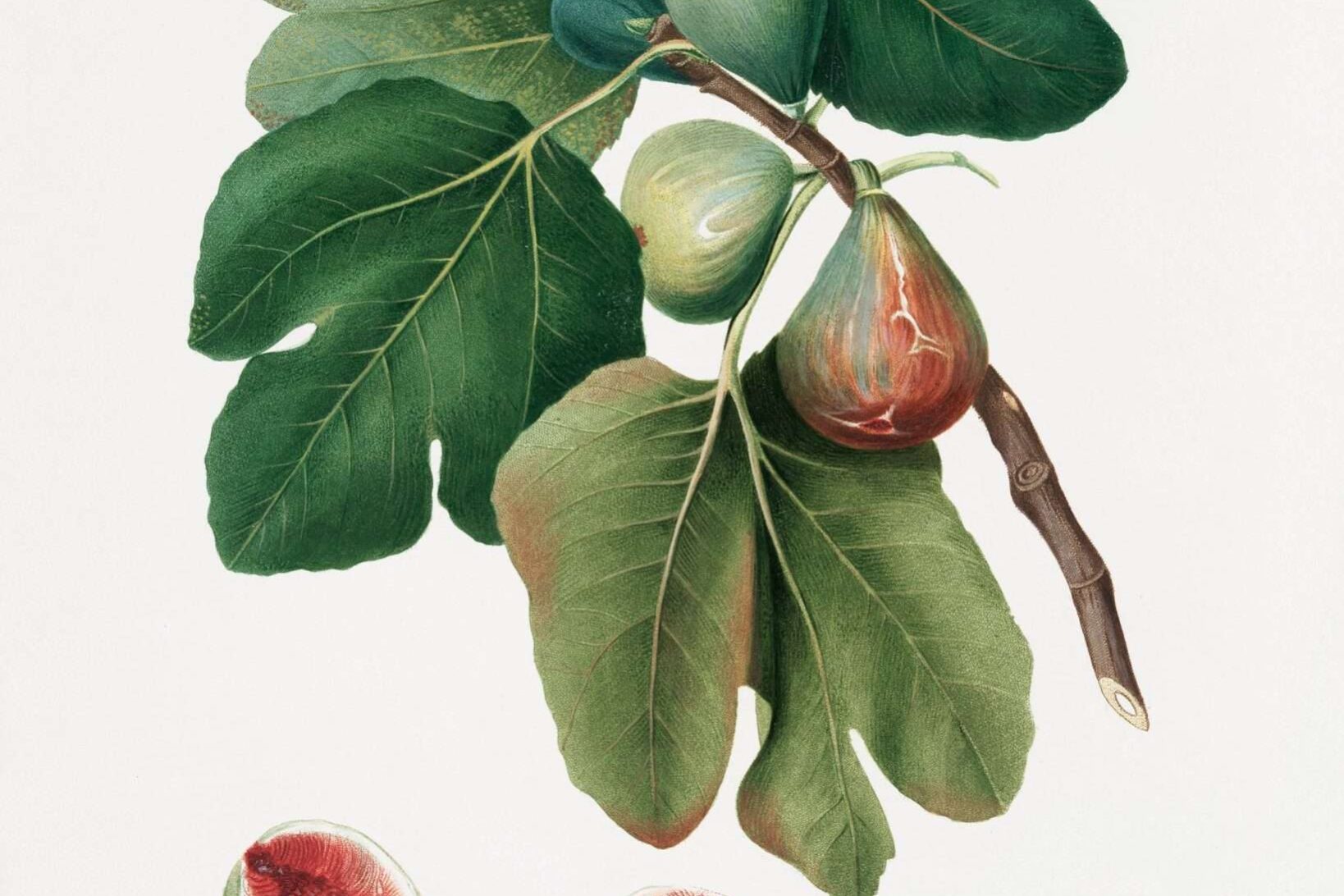
Overcoming the theory of retribution, Jesus shows the complexity of life that is such that it cannot be controlled by man. Through a very suggestive parable, which speaks of vines, figs and fruits, Jesus recalls the Father’s plan: the blossoming of every life. When one disconnects from the relationship with God and gives in to sin, it is as if the land becomes harsh, inhospitable and infertile. The character in Jesus’ parable addresses the vinedresser saying: “Look, for three years I have been coming to look for fruit on this tree, but I find none. So cut it down! Why should it exploit the land?” There would be good reasons to cut down the sterile tree, but there is a delay, a further wait in view of the hoped-for fruitfulness. It is the time of God’s patience, the moment in which the Father awaits for the return of the obstinate and rebellious son. It is an opportunity for all of us to abstain from “unhealthy” habits and relationships.
Image – Christian Art
Common Fig (Ficus carica sativa),
Printed by Giorgio Gallesio (1772-1839),
from Pomona Italiana (1817 – 1839),
Print on paper
© New York Public Library