


Fr Marco Lazzaron
want to begin this reflection with two quotes. The first is taken from the Catechism of the Catholic Church and the second from Blessed Carlo Acutis who, as we recently discovered, will be canonized soon.
The Eucharist is the source and summit of all Christian life. All the sacraments, as well as all ecclesiastical ministries and apostolic works, are closely united to the sacred Eucharist and are ordered to it. All the spiritual good of the Church is contained in the most holy Eucharist, that is, Christ himself, our Easter.
The Eucharist is my highway to Heaven. If we stand before the sun, we become brown, but when we stand before Jesus in the Eucharist, we become saints.
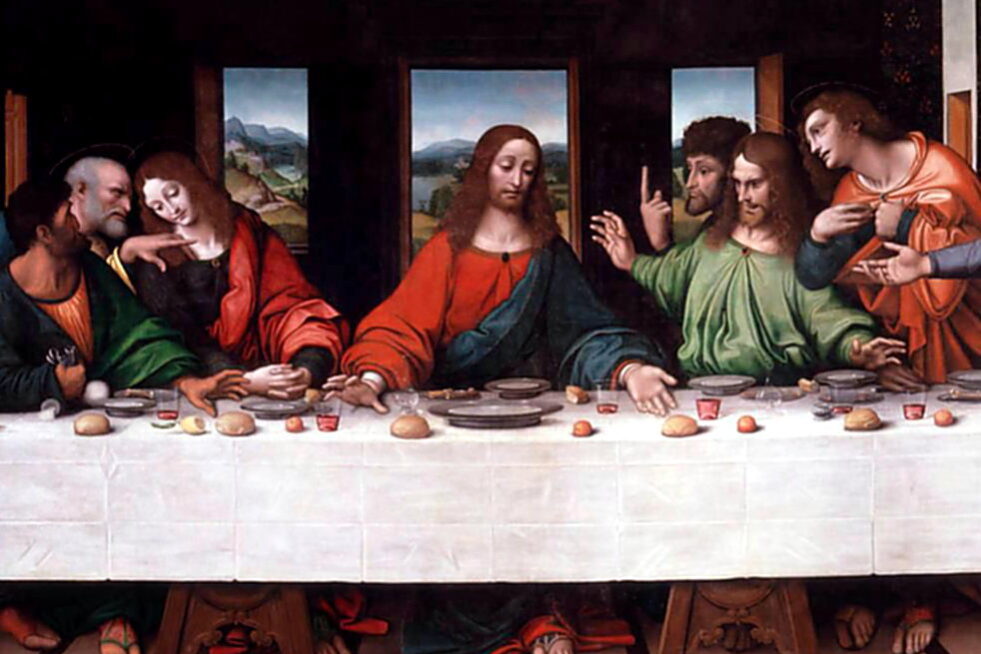
These sublime words introduce us in a significant way to the heart of the Solemnity of the Body and Blood of the Lord. The communion of divine life and the unity of the people of God, on which the Church is founded, is adequately expressed by the Eucharist. Mark’s Gospel illuminates the contemplation of this Mystery by reporting what happened at Easter when Jesus and his disciples were gathered in the Cenacle in Jerusalem.
Knowing that his time was near, in that ritual banquet, in which the passage from slavery to freedom was remembered, he wanted to combine new words with traditional gestures, thus changing their meaning. In this way, he instituted the sacramental sign in which his passion and his death were interpreted as the sacrifice that established an eternal covenant between God and men.
In the sacrifices, the victim was immolated and a sacred meal was prepared with the meat with which a newfound friendship or covenant was celebrated. In the context of the ritual Easter banquet, through the assumption of the symbols of bread and wine, Jesus replaces the ancient sacrifice with the celebration of the new. This time the victim in whom the pact is sealed is himself. Therefore, the disciples who eat the bread and drink the cup welcome the benevolence of God, who “justifies” them, that is, makes them worthy of himself, establishing with them a covenant through which one participates in his passion, death, and resurrection. In the Eucharist, the Covenant between God and men is therefore celebrated.
By eating the Body and Blood of Christ, man takes God into himself and despite his miserable condition as a sinner, he is made worthy of being in his presence to live his own life.