



Fr Marco Lazzaron
he story of the people of Israel who fled from Egypt tells us that only God can satisfy man’s material needs. God intervenes to feed his people, granting meat which is given in the form of quails at sunset, but above all with the gift of “manna” from heaven. Unexpectedly in the morning people notice that a layer of dew hides something they have never seen and they don’t know how to identify, and exclaim: “Man hu” = what is it? The people will be nourished by this food for a long time and will draw the strength to continue their journey. A sufficient quantity is provided day by day; God provides the people with this unexpected food, which encourages us to consider that only God quenches the hunger of his people. The Our Father prayer reinforces the concept of providence with the expression: “Give us today our daily bread”: literally “the bread of the coming day”. “Bread” is the indispensable basic food, the one you cannot do without. The bread with which we nourish ourselves is always a gift of providence and it would be necessary to rely on it, also showing gratitude to the One who is at the origin of all material sustenance.
However, we must not flock to him only for physical hunger or material needs alone. Rather, Jesus tells us that alongside the bread legitimately desired every day for survival, there is another basic food for spiritual benefit and for eternal salvation. In fact, Jesus says: “Moses did not give you the bread from heaven, but my Father gives you the true bread from heaven (Jn 6:32). While admitting the effectiveness of Moses’ powerful intercession, Jesus now affirms his superiority over him, because he identifies himself with the “living bread”.
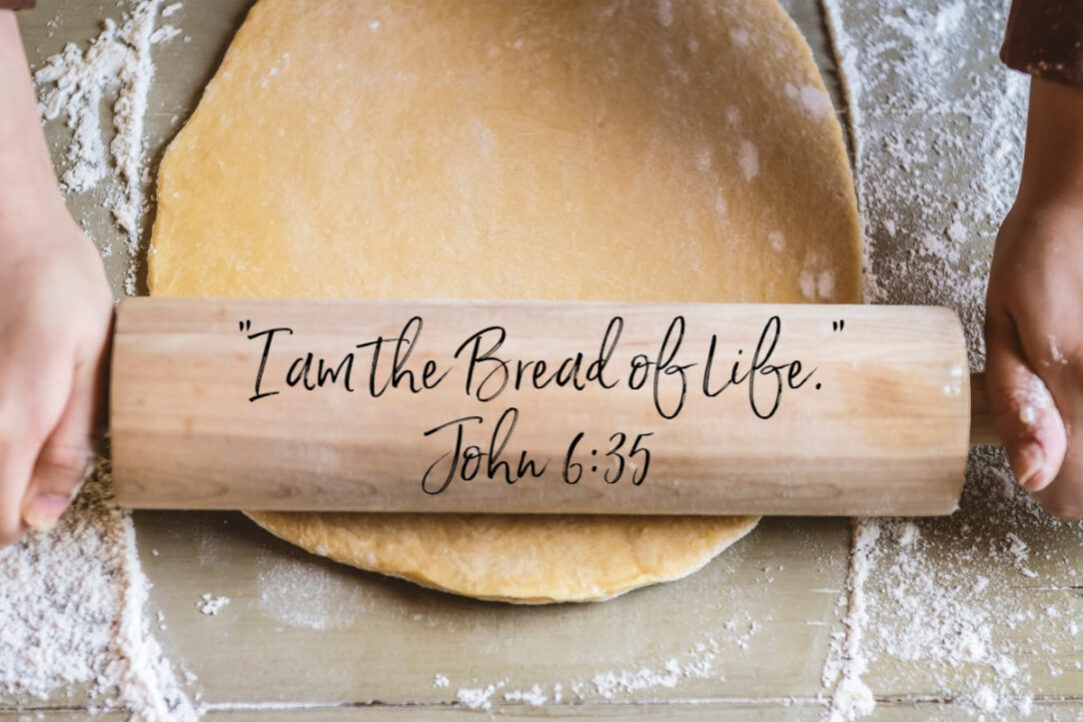
“My flesh is real food and my blood is real drink. Whoever eats my flesh and drinks my blood remains in me and I in him” (Jn 6:52 – 53) exclaims Jesus exactly after having performed the miracle of the multiplication of the loaves and with these words he associates, precisely, bread and flesh. While he invites everyone to eat his “flesh”, he defines himself as “living bread come down from heaven”, by eating which one will no longer be hungry.
However, receiving bread also means that we share it in works aimed at preventing the spread of hunger and injustice in the distribution of food. Assimilating Jesus as living bread cannot exclude our concern for those who do not have basic food; on the contrary, faith and adherence to the Living Bread entail as a necessary consequence that the innumerable needs of those who suffer from hunger in all parts of the world are met, that steps are taken to feed those who lack even the first sustenance for survival.