



Fr Marco Lazzaron
n the Gospel of the Fifth Sunday of Lent, the evangelist John leads us into the Temple. The arrival of Jesus, attracts the people who want to listen to his word, but also the group of his detractors who always have a case to present to him, or rather, a trap to set for him in which they hope he will fall to finally be discredited. This time, the case of a woman caught in the act of adultery is submitted to Jesus. According to Jewish practice, while a man commits adultery only if he has sexual relations with the promised bride or wife of another (not in polygamy or relations with prostitutes), the woman is considered an adulteress when she has sexual relations with a man who is not her husband, even in the case of rape. Therefore, while the woman’s sin lies in marital infidelity, the man’s sin consists in violating the property rights of another man.
According to the law of Moses, a woman who has committed adultery must be stoned. The scribes and Pharisees are not content to simply mention the Scripture. They also want to know Jesus’ opinion. If Jesus agrees with stoning, he will be considered an authentic observer of the Law, but he could run the risk of losing support; if, on the other hand, he disapproves of stoning, he will contradict the teaching on the indissolubility of marriage and will appear as someone who places himself above the Law and Moses. How can we get out of this impasse?
On the first Sunday of Lent, it was the devil who tempted Jesus in the desert; now it is believers, the guardians of Jewish orthodoxy, who tempt him. The alleged adulteress is put in the middle, but she is not the one who is interested, she is only being used as a tool in the war that the Pharisees have declared against Jesus.
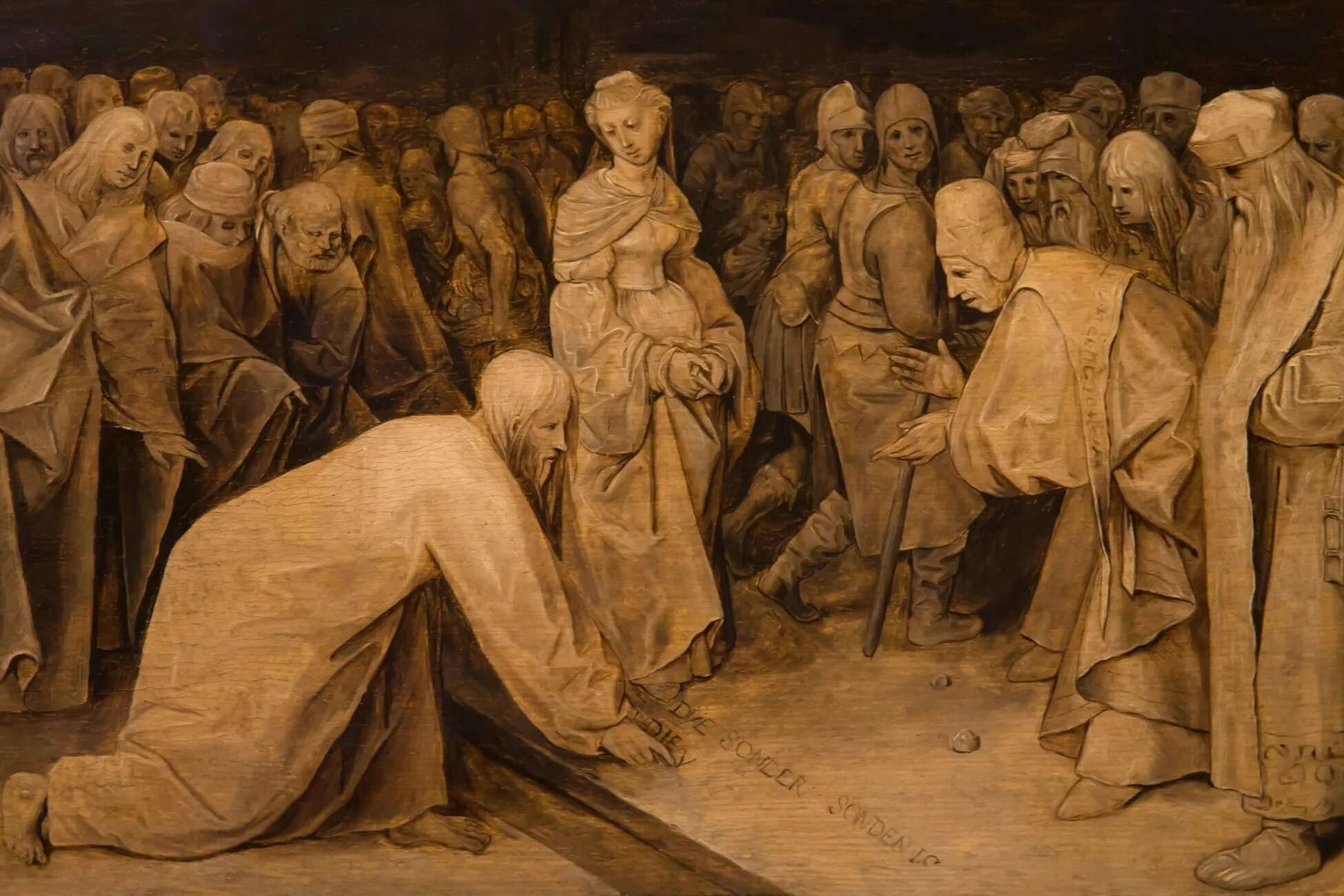
Jesus’ reaction is surprising: instead of answering, he bends down to write with his finger on the ground. One might think of the practice of Roman judges who wrote the sentence before pronouncing it or of Jer 17:13 where it is said that whoever distances himself from the Lord deserves to have his name written in the dust. Jesus’ silence appears, however, as a strong provocation to personal responsibility. The Pharisees, however, do not give up: they insist because they want to frame him. Then the defendant, responds with a provocation that silences the detractors and forces them to step aside: “Let him who is without sin among you be the first to throw a stone at her”. Jesus appeals that it is necessary to eradicate evil from Israel but adds something new: the execution is up to those who are without sin. And who could be, if according to the Scriptures even the righteous man sins seven times a day?
While Jesus repeats the gesture of writing on the ground, which also refers to the innocence of a child who plays undisturbed without being disturbed by what is happening around him, the scribes and Pharisees go away indignantly. The woman, in fact, remains alone and receives only the attention of Jesus: “Woman, where are they? Has no one condemned you? Neither do I condemn you; go and from now on sin no more”. Jesus pays attention to the woman and recognizes her dignity as a daughter of God.