


Fr Marco Lazzaron
esus, a faithful and practicing Jew, attends the synagogue on the Sabbath where Sacred Scriptures are read, and where God is praised and worshipped. But for Jesus, the synagogue is also the place for teaching those gathered there. His word appears to the ears of his listeners as a word rich in authority, different from that of those who, as “scribes” were responsible for the teaching of the people. The evangelist Mark, in fact, writes: “And they were astonished at his teaching, for he taught them as one who has authority, and not as the scribes”. The word reveals the person and, in the long run, is felt when the word comes out of the heart and when it is only a fiction. The word of Jesus is a prophetic word, it is a word that shakes, it is a word different from all others because it is a word that comes from God.
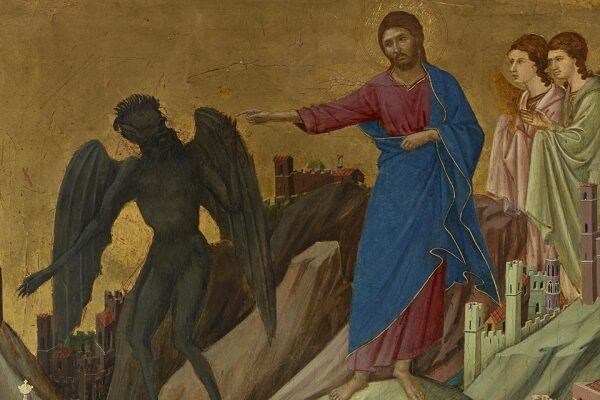
However, Jesus’ teaching is not only made up of words but is also expressed through authoritative actions and gestures. For this reason, the evangelist recounts a miracle of healing and precisely the liberation of a person from the devil. According to the Gospel, the devil is not a symbol, but a very real person who is freely oriented against God. Even today, the existence of the devil can be perceived by many clues, from many absurd forms of slavery, into which man falls, destroying his own dignity. We think, for example, of money, power, and success: sometimes we are willing to hit everything and everyone to achieve our goal! Unfortunately, many say that the devil does not exist. In some ways, it’s convenient to think that it doesn’t exist. But the Gospel is clear: the devil does exist. In this regard, Pope St. Paul VI said: “Those who do not believe in the existence of the devil should know that even those who do not believe in illness can become sick!” The account narrated by Mark points out that the man possessed by the devil attended the synagogue. No place can automatically make a person good or bad: goodness or badness depends on the heart, on the conscience, on the works. Let us not consider ourselves good just because we attend church: goodness is not acquired by breathing the air of the church, but by living the Gospel we hear in the church.
In this context, which is the drama of human life, the Gospel proclaims Christ as the victor over the devil. By his word alone, he takes away from Satan an indisputable power over man. Christ’s coming, especially his death and resurrection, broke Satan’s lordship over the world.
In the Lord’s Prayer, we say: “and lead us not into temptation, but deliver us from evil”. We can be freed from the evil one only if we have faith in Christ Jesus, only if we listen to and put into practice his Word, and if we are nourished by His Most Holy Body and Blood. St. John Chrysostom said: “The Christian who returns from the Eucharistic table resembles a lion that emits flames of fire from its mouth; the sight of him is unbearable to the devil” who, as we read in the First Letter of Peter: “goes about looking for someone to devour”. So, then, dear Readers, let us “stand firm in the faith” (cf. 1Pt 5:8-9)