



Fr Marco Lazzaron
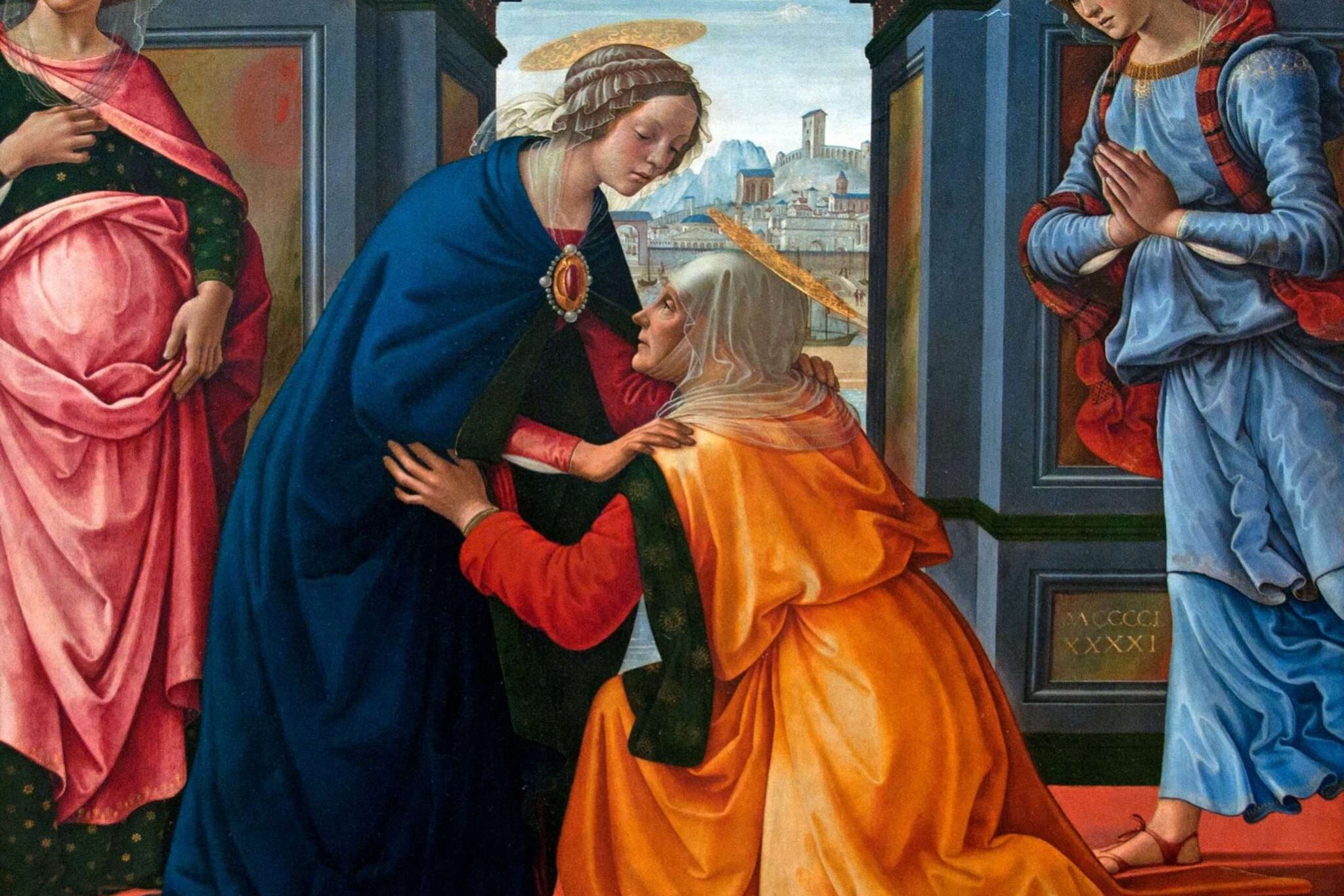
n the scene of the Visitation, Luke presents us with the joyful meeting between two pregnant women: Mary and Elizabeth, her relative. The evangelist celebrates the triumph of motherhood, a motherhood that appears as a free gift, a delightful manifestation of the will of God with whom nothing is impossible. The sign that God promised to Mary through the angel, to guarantee the happening of a completely impossible motherhood according to human logic, finds its confirmation.
After her personal Pentecost marked by the overabundant outpouring of the Holy Spirit which allowed the miracle of the flesh of the Son of God to germinate within her, Mary does not hide, she does not close herself off in the privilege of having been elected mother of the Son of God.
Mary arises. The Greek text presents us with the verb anistemi, “to rise”, or even “to rise again”, as in the texts that refer to the resurrection of Christ. This means that this young daughter of Israel, who lives on the outskirts of the empire and who, due to her condition as a woman, is a marginal figure in society, takes on her mission with extreme authority, like all the men and women who in history have received the task of initiating processes of liberation, conversion and consolation. Mary is preparing for the exodus as testimony that the gift received is not a “jealous treasure”, but a universal heritage to be transmitted to posterity. She does so with the responsibility of a queen (since she is the mother of the king whose kingdom “will never end”) and with the passionate dedication of the “servant of the Lord”, of the disciple who accepts to be God’s maiden. Mary leaves Nazareth and heads towards the mountains, a metaphor of the human journey towards God.
Arriving at Elizabeth, Mary makes the most usual gesture of every meeting: she says “hi”. This greeting, however, has a special effect: it unleashes the joy of the child that the old woman carries in her womb (though been barren) and causes an outpouring of the Holy Spirit in the mother. Through his mother, in fact, the little “prophet of the Most High” called to prepare the way for the Lord, recognizes in Mary’s womb the presence of the Messiah and Elizabeth explodes with joy: “Blessed is the mother and blessed is the child she carries in her womb”. The Spirit also grants Elizabeth new and prophetic eyes, capable of seeing the presence of the Lord beyond Mary’s pregnant womb: “What do I owe that the mother of my Lord comes to me?”
Elizabeth is amazed by such a visit and recognizes herself as a privileged witness of a completely unprecedented passage of God in history. That profound joy that shook her little one in the womb and made him jump is not the fruit of a human work but of God’s visit. God made himself accessible to us and did so through a woman who can define herself as “blessed” because her fruitfulness comes from listening to the divine Voice which alone makes an inexhaustible passion for God germinate in the human heart.