



Fr Marco Lazzaron
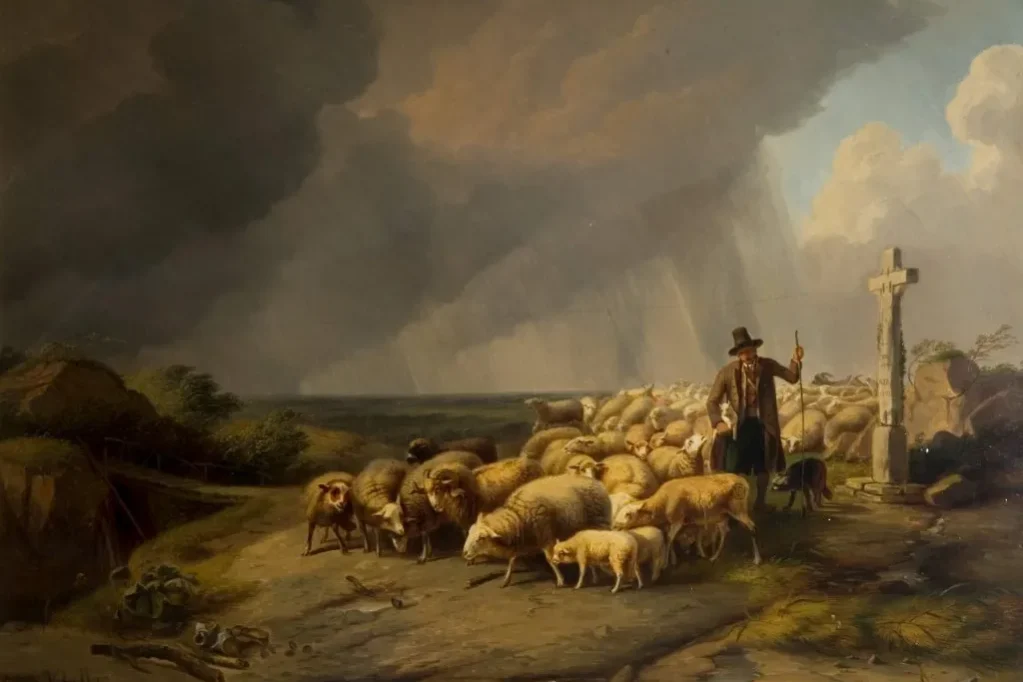
he Jews were waiting for the coming of the Messiah, the universal peacemaker who would guide and lead them. They should have understood, at least from the prodigious works that Jesus performed, that the Christ was really him, a witness to the mercy and love of the Father. But the Jews had rejected him, because “they were not his sheep”: they were not docile to listening to his Word and to welcoming his person and his announcement of salvation. At this point Jesus defines the true relationship that must be established with him and he does so by comparing himself to a shepherd and his disciples to the sheep that he guides and takes to pasture.
Jesus is a shepherd because he promptly and in various ways, with care and attention, dedicates himself to each of his sheep so that none of them gets lost, but that all of them find the right orientation for the fertile pastures. Jesus takes care of even the smallest and most insignificant sheep, going to look for it if it gets lost. He bends down to heal the wounds that in the meantime it must have suffered in its loss, he carries it on his shoulders and retraces the woodland terrain in reverse to bring it back to the fold among the others (cfr. Mt 18:12-14). Each disciple of Jesus, indeed each man is the object of love and care on the part of the Father who in Christ demonstrates his love and his mercy towards those who get lost. However great our sin, God abandons no one and uses every means to recover us, calling us to communion with himself and to salvation through Christ.
What should the attitude of the sheep be? That of meekness, of listening, of trusting following. Certainly, the disciple of Jesus participates in everything actively and with a critical and responsible sense; he evaluates, distinguishes everything and makes his choices in awareness and freedom. The Christian is not a naive and unprepared sheep. However, towards his shepherd he shows marked sensitivity and openness, not without a disposition to listen and to following. Believing involves abandoning oneself, giving oneself, opening oneself, and not resisting what God reveals. The Christian is a sheep in that he does not resist the mystery of God in Jesus Christ, he entrusts himself to him with ease and without conditions, he identifies with Jesus, experiencing him as “the way, the truth and the life”, living of him and persevering with him.
Our faith further illustrates to us how Jesus himself guides us in the pastoral care of the Church that is founded on the apostles, especially in the ministry of the pontiff, Vicar of Jesus Christ and successor of the First Apostle Peter. Through him Jesus feeds us and leads us, having at heart that his sheep have a visible orientation, a human guide who accompanies them towards divine quarrels, with an immediate and direct language that reflects the same familiarity that he has with the Father (Jn 21, 15 – 18).
Gathering the Flock,
by Eugène Joseph Verboekhoven (1798-1881),
oil on canvas,
painted in 1839,
© The New Art Gallery Walsall, United Kingdom
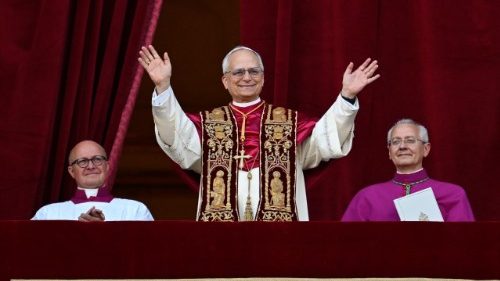
In the ministry of Pope Leo X1V, we feel gathered and called by Jesus as he consolidates us in “one faith, one baptism and one God and Father of all” (Eph 4:4), granting us the gift of the Spirit who fosters communion and consolidated unity in diversity.