


Fr Marco Lazzaron
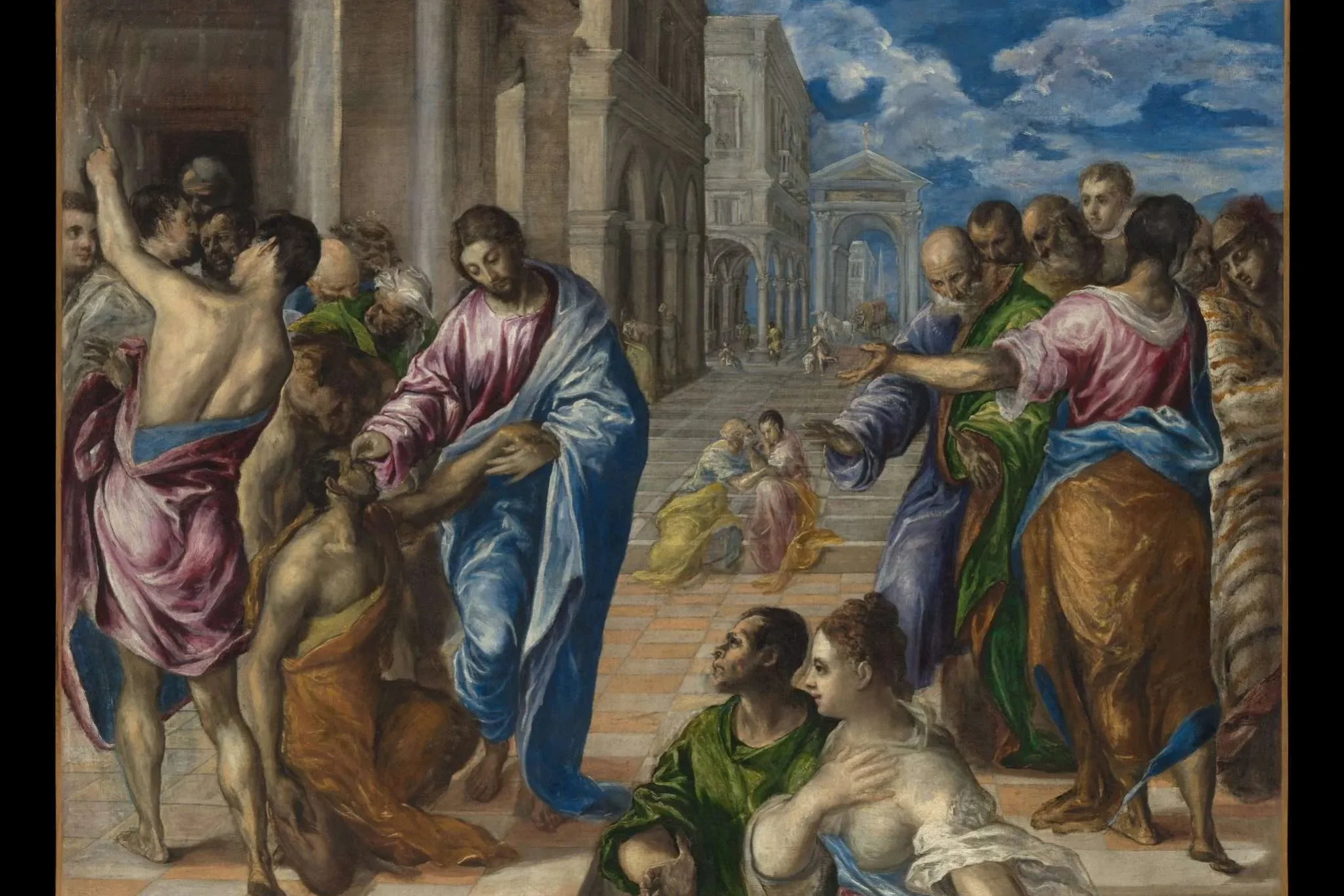
he Gospel for this Sunday of Lent presents us with many dialogues and shows us a real process of discernment that leads to recognizing the work of God and one’s own vocation. A man blind from birth goes to the pool of Siloam after encountering someone who performs a particular gesture on him with saliva and mud; he washes himself and he can see. Yet the one who had been healed does not see his healer; he knows very little about him. This hidden identity reminds us of God’s delicate way of approaching human life.
It is precisely this gentle presence of Jesus that gives human beings the freedom to look within themselves, to read reality in the light of an encounter. The crowd, the neighbours, the blind man’s parents, and the Pharisees also try to understand, but in a worldly way. Thus, the story takes the form of a real trial—not only about the blind man and his life but also about how Jesus acts. There is no direct encounter; rather, there is a reflection on the encounter between Jesus and the blind man. This tells us that the Christian experience is not a philosophy or an ethics to be studied or rationally understood, but an encounter that leaves concrete fruits. The interrogation that investigates various aspects—sin, illness, the lawfulness of Jesus’ action—is fruitless; it is even assumed that there might have been a case of mistaken identity, that perhaps it was not the same blind man (v. 9). It is an almost juridical way of proceeding, a human way of acting in the face of something that escapes understanding.
Then there is the experience of the blind man, who comes to recognize Christ as the “light of the world” and seems to call us, in turn, to pass from blindness to light. Saint Paul would tell us to behave as “children of light” (Eph 5:8); he would remind us that we are called to be light, that we belong to the light. Indeed, the Baptized are those who are “enlightened”. This Lenten season is precisely, therefore, a call to cultivate the prophetic seed of baptism.
The blind man does not know everything, but he experiences Jesus, he walks, he trusts in concrete reality. Acquiring sight, instead, opens the only authentic and joyful way of existing—recognition and gratitude. The blind man recognizes and becomes free through a process initiated by his encounter with Jesus, which sheds light on the existence of his family, the Pharisees, his relationships, and his illness.
This man moves from an initial perception of Jesus as an “extraordinary man,” whose name alone he knows, to a confession of faith that embraces his whole existence: “I believe, Lord!” His life gains a certain autonomy. In front of those who take details too seriously, he grasps the essential point: now I see through the work of Jesus.
Those who do not open themselves to an encounter with the real presence of Jesus and who wish to preserve their own power will never be able to understand: for them, the truth coincides with their own certainties and interests. Those who are freed from blindness, instead, discover the truth of God and of the human person: they see that God is for humanity, and this freedom manifests itself as love and service. Thus, the story begins with a blind man who regains his sight and ends with those who, though they consider themselves to see, remain blind in their hearts.
This makes us question ourselves. How often do we presume that we see—that with certainty we make judgments that begin and end with us? Even the sign of healing, carried out with saliva and mud, is a gesture full of physicality, telling us that Jesus truly allows himself to be encountered and that, concretely, he touches us and transforms our lives.
PRAYER
Lord Jesus, light that rises from on high, come to visit us in our darkness.
You who opened the eyes of the blind man, open our hearts as well, so that we may recognize you in the humble and concrete signs of life.
Free us from the presumption of seeing and grant us the joy of believing.
May our Lenten journey be a process of conversion from blindness to light, from selfishness to service, from fear to the freedom of the children of God.
Make us the light of the world so that our lives may illuminate others with your love. Amen.