


Fr Marco Lazzaron
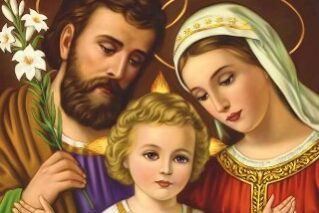
he Holy Family is caught today in the most intimate and happiest moment for every family: the one in which it is cheered and completed by the birth of the first child. Despite the climate of mystery in which the birth of their child took place, Mary and Joseph experienced the events of their lives in a way no different from that in which two normal poor spouses who love each other do so. They are the first to be surprised by what happens and is said around the child. They too live by faith and are led, moment by moment, to discover the will and plan of God. Everything, therefore, in the Gospel story is profoundly true and human; nothing is a recitation of a part already written and known.
With this celebration, the Church wants first of all to exalt and reaffirm the dignity of the family; it also wants to help us reflect as Christians on this reality within which we all live and to which we owe our life itself.
Some say that we priests do not know what family life is and that we should remain silent on this point, leaving every man and woman free to decide what is best. But if we don’t know from personal experience what married and family life is like, we know how it should be because we find ourselves having to interpret the Word of the one who created the family, who redeemed it and consecrated it with a sacrament. The family is, in God’s plan, the continuation of creation. In some way, it takes its meaning from creation. God creates and gives life because he is good, because he is love, and love tends to spread and communicate itself. In this light, the family appears to us as the reality desired by God so that life spreads, through love.
Is it possible to still see the family as the place of love, in an era in which it is so often under accusation, so often the scene of terrible events? We Christians must answer: Yes, it is possible, indeed it is necessary! It is precisely this testimony that believers are today called to give to the values of creation. It is this testimony that today’s celebration aims to seek from us.
How do you acquire this love that knows how to forgive, that knows how to give in silence, and knows how to forget? It is not just the result of the right choice. It is above all the fruit of generosity; it is a victory against selfishness, the invisible but deadly enemy of love and, therefore, of the family. But also, and above all, the fruit of God’s grace and help.
Therefore, let us pray together today to the Holy Family of Nazareth, that God may truly be welcomed into the homes that are open to receiving new Christian married couples and that God may return where his absence has been forced by the spouses.