


Fr Marco Lazzaron
n today’s Gospel we hear of a place known for its harsh hospitality, its intense heat and the danger that, if one is not well supplied, one can die above all from thirst: the desert. In this place, water becomes an essential element for life. But, in the desert of our lives, from what source do we draw what we need for our sustenance? On the other hand, the desert becomes the place we learn the right direction, the right decision to take, so as not to die or be overwhelmed by the sand.
The people of Israel had a long experience in the sandy dunes before entering the Promised Land, and they faced difficulties that led them to grave infidelities. However, in the desert it is the Lord Himself who leads us, so that there we may truly discover what is essential: our relationship with God. For this reason, Jesus will indicate to us, in a passage we will read on the First Sunday of Lent, the importance of undergoing this kind of experience.
Having the desert at the beginning of these two important seasons of the liturgical year, God wants to tell us that we must pass through this place in order to live fully these two central moments of our faith and, thus, experience that we are called to a true intimacy with Him, stripping away everything that prevents us from going to Him.
There is also the opposite risk: in this place one can become lost and create idols for oneself, thinking they will offer protection, as Israel did on Sinai with the golden calf; or one may murmur and complain because there is no water or food. But God with his Word Incarnate and through the Holy Spirit, wants to give us little drops of water to moisten our dry lips. These drops will then lead us to sacramental life and to meeting our brothers and sisters.
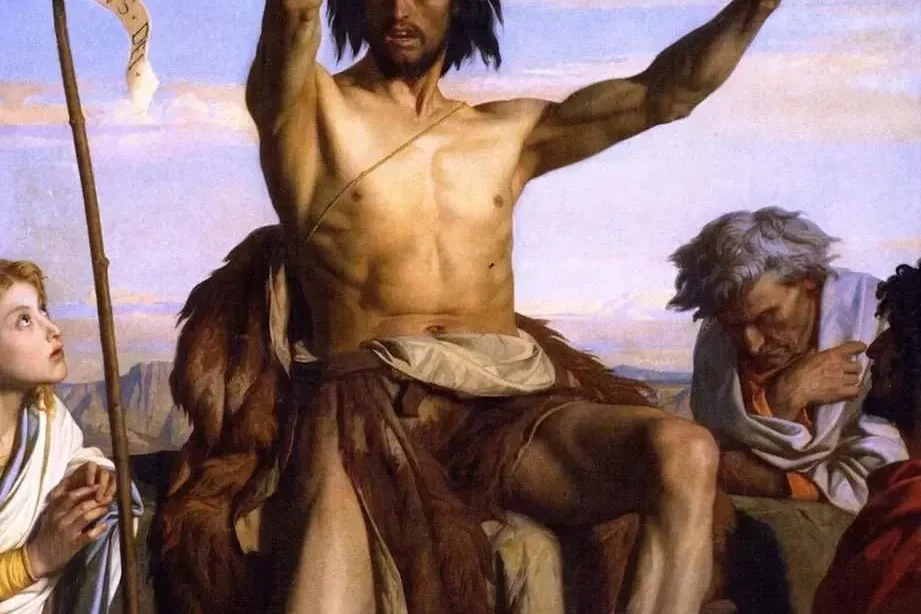
In the midst of the desert, there is an authoritative witness: the Baptist, “a voice crying in the desert”. He is described with strokes that are hard to understand: a man clothed in camel skins, eating locusts and wild honey. This helps us grasp the austerity of his witness. He is a man who, more than being a teacher, is truly a witness.
We too, in our deserts, have witnesses who speak to us of the Messiah, who has the face of Christ—a face the Baptist did not fully know, not having seen Him at work. Seeing the gentle face of Jesus, we understand that the Messiah is merciful as well as just. There is no mercy without justice, but neither is there justice without mercy. In any case, it is the task of all Christians to be witnesses. Advent is the time when the disciple must point to heaven as reality.
Places where we hear invitations to prepare for Christmas include, besides the Mass, catechesis and the sacrament of Reconciliation. In the desert, helped by the witnesses, we receive the invitation to conversion—that is, to return to the first love of our faith, when God called us to follow Him in our lives, and to rediscover that in every choice of our lives it was He who sealed it in faith, and through the sacraments made it indissoluble.
The Baptist, the desert, and the call to conversion are the pivotal points of this Advent journey. Drive carefully on this road to Christmas!