



Fr Marco Lazzaron
he episode of the disciples on the road to Emmaus gives us precious keys for experiencing—and renewing—the meaning of Easter: moving from sadness to joy, from self-absorption to communion with God and with others. Beneath the surface, we can glimpse the dynamic of the Eucharistic celebration, highlighting four key moments: the penitential act; listening to the Word; the breaking of the bread; and being sent on mission.
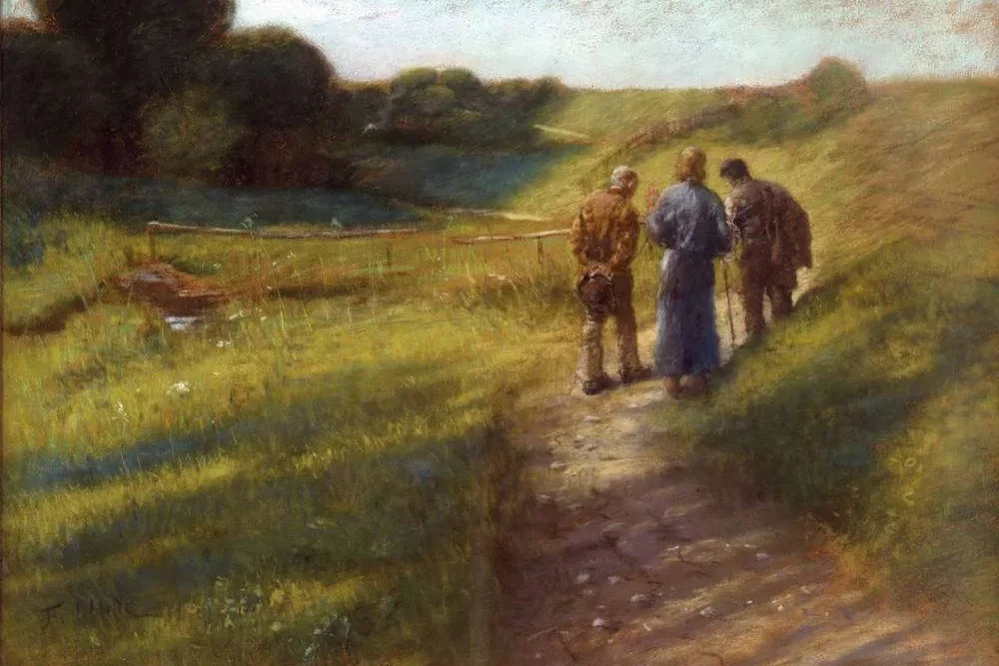
The disciples were leaving Jerusalem and heading toward Emmaus. They were discussing among themselves—literally “preaching to each other”; discouraged, they were walking away disappointed, absorbed in their own “failed” expectations. This was leading them away from the place where Jesus had told them to wait for him, away from the community.
It is precisely along this path of distancing that the Risen One becomes present, walking beside them; yet they were unable to recognize him. He helps them bring out what was wrong; the reason is simple: they had expected something very different from Jesus. They were “disappointed” in God.
After listening to them, Jesus strongly admonishes them and opens them to listening: “How foolish you are, and how slow of heart to believe all that the prophets have spoken! Was it not necessary that the Christ should suffer these things and then enter into his glory?” Here we see a “penitential” dimension—a salutary wake-up call that interrupts their mental patterns and opens them to listening.
How often do we too suffer not only because of events themselves, but because of how we interpret and understand them? How often do we get stuck in our own thoughts, unable to see anything beyond our own perspective? Jesus asks us to stop all that, to open ourselves to another reading—deeper, truer. Jesus “had” to pass through this; it was necessary that he love us to this extent, revealing to us the true face of God.
So Jesus helps them re-read the whole story in the light of the Scriptures; it is the Word that enlightens, that helps us grasp God’s perspective, that illuminates the heart and frees it from the self-centered and victim-like attitudes into which we so often fall. And as the disciples walk and listen to Jesus, their hearts begin to burn again.
That presence warms the heart and reassures them. Jesus seems to go on ahead, but they urge him: “Stay with us, for it is nearly evening.” And Jesus stays, and breaks bread with them, and then becomes invisible to their eyes. This is where Jesus continues to remain with us: in the sacrament of the Eucharist, in that communion celebrated and then lived, which he himself first desired to share with us.
At that point, the disciples ran back to the others, returning to the community full of joy. It is like sending them on a mission; they go back to share what they have experienced, whom they have encountered, and how they recognized him in listening to the Scriptures and in the breaking of the bread.
Prayer
“Stay with us, Lord! If you remain with us, our hearts are at peace. Walk with us, as you did with the disciples of Emmaus, on our personal and communal journey. Open our eyes, so that we may recognize the signs of your ineffable presence. Make us attentive to the voice of your Spirit. Nourished each day by your Body and your Blood, we will recognize you and serve you in our brothers and sisters”. (St. John Paul II)