



Fr Marco Lazzaron
he Gospel of this Sunday does not place before us sins like stealing, killing, committing adultery, or bearing false witness, but rather a sin often left unconfessed: the sin of indifference. One day, in Naples, I saw a poor man who, provocatively, had hung around his neck a piece of cardboard that read: “I am invisible!” I assure you, for almost everyone passing by, he truly was invisible!
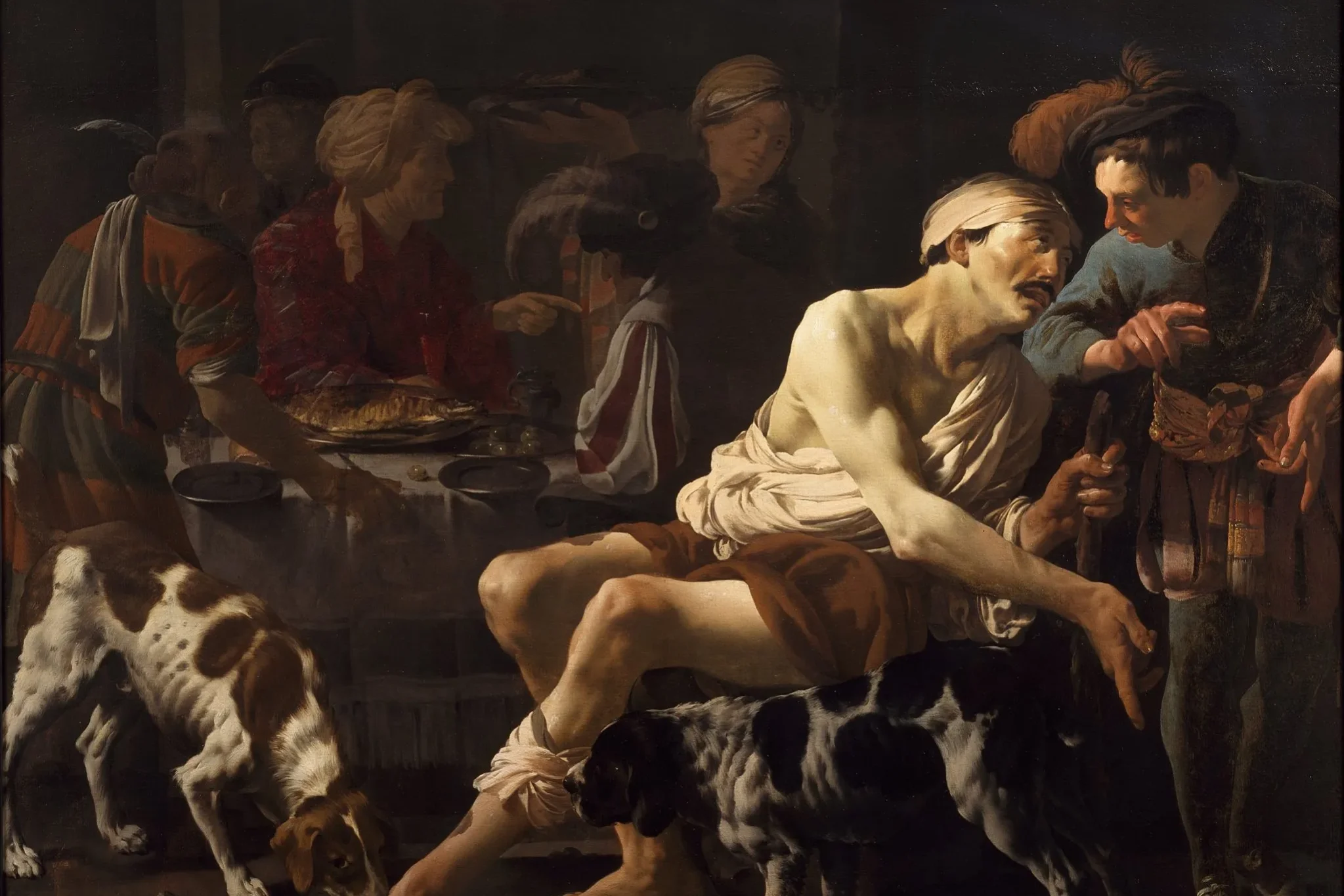
“The parable today begins almost like a fairy tale: ‘There was a very rich man’, unnamed, identified only by his possessions and a poor man named Lazarus. The rich man is a man closed in, shut within his small world: the world of banquets, fine clothes, vanity, and friends. Closed in his bubble of vanity, he was incapable of looking beyond and did not notice what was happening outside his closed world. He knew no periphery; he was completely locked within himself. Yet the periphery was right at his doorstep”. (Pope Francis)
As in the life of each one of us, the day of death came for both—and this is what unites us all: in death, the difference lies entirely in how we lived our earthly life! One ends in torment, and Lazarus in eternal joy.
The heart of the parable, however, is not only about an eternal reward in the hereafter, but also in Abraham’s words: “a great chasm has been fixed between us and you”. A gulf, already separated the rich man and Lazarus on earth: one hungry and the other satisfied, one healthy and the other covered in sores, one living on the streets, the other safe in a fine house. The rich man could have bridged the gap that separated him from the poor man, but instead, he made it eternal.
What evil did the rich man do? The parable does not dwell on his sins; it does not condemn him for his house, his clothing, or his food. Perhaps he was even a religious man, observant of the commandments. He did not even mistreat Lazarus. The mistake of his life is that he never even noticed Lazarus existed. He did not see him, did not speak to him, did not touch him: for him, Lazarus did not exist; he was irrelevant. Here we touch one of the hearts of the Gospel, whose beat reaches the day of final judgment: I was hungry, I was cold, I was alone, abandoned, the least, and you broke bread, dried a tear, gave me a sip of life. The evil is indifference—leaving the chasm between people intact. Instead, the first miracle is to notice that the other, the poor man, exists, and to try to bridge the abyss of injustice that separates us. If you are praying and a poor man needs you, leave the prayer and go to him. The God you will find is more certain than the God you are leaving behind.
Let us ask for the grace not to rely too much on our earthly possessions, and for the grace to know how to share, so that we may gain access to true life, to eternal life, to have a place in the heart of God!