



Fr Antonio Pineda
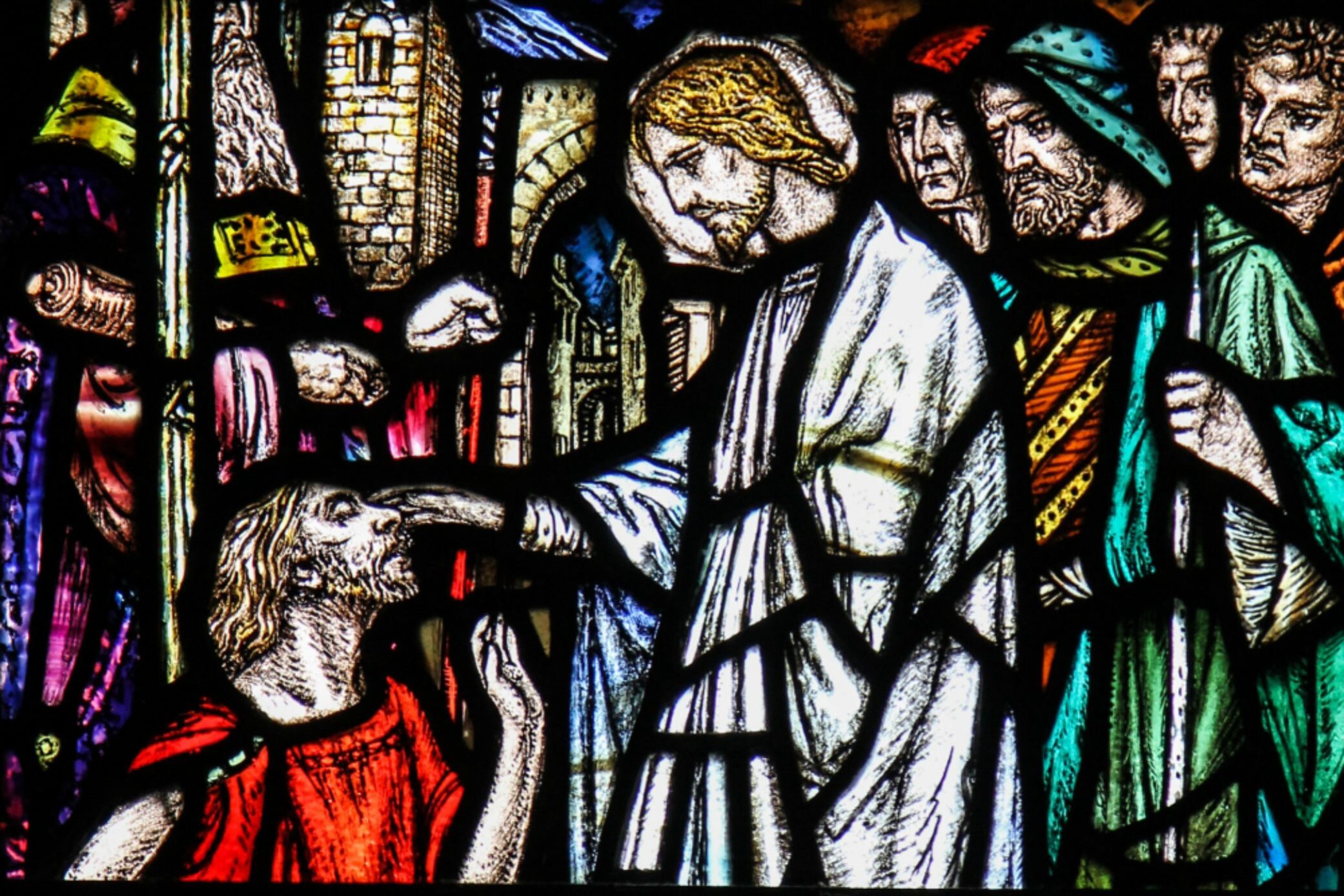
mong the many lessons hidden in today’s beautiful Gospel passage, one deserves special mention. How odd that Jesus used spittle and mud to make clay, put the clay on the man’s eyelids with his own fingers, and told him to go to the pool of Siloam to wash! Did he have to perform the miracle in such a dirty, messy, tangible way? No: he could have merely snapped his fingers. Yet, it was appropriate to do what he did.
The obvious reason for this appropriateness was that in ancient times saliva was often used in medical procedures; it was considered to have life-giving, healing properties. But more than that, through this method, the blind man felt Christ touching him, heard his voice, and actively participated in God’s wonderful, saving deed. In this way, then, Christ communicated God’s divine grace in a way that was adapted to human nature — which includes both body and spirit. This is how he always works, not from a distance, but up close and personal.
Christ’s touch gave the blind man hope and confidence, making the miracle into a personal encounter, not a magic trick. The Church preserves this method of administering God’s grace, through the sacraments. The priest’s words of absolution at the end of confession provide real closure to our need for forgiveness. The water of baptism, the bread and wine of the Eucharist, the chrism of confirmation … The material elements of the sacraments are an extension through the history of the Incarnation, of God’s eager desire to reach out and touch us, to be our companion. We are not purely spiritual beings; it suits us to encounter God through the mediation of physical realities. Christ doesn’t save human nature by destroying it, but by redeeming it.
The Church requires us to go to confession once a year but the Church recommends that we go much more frequently — every month, every fifteen days, even every week, as the Pope does. This Sunday’s Gospel reminds us of one of the reasons behind this command and this recommendation. Christ doesn’t want us to experience his forgiveness vaguely, from a distance. He knows we need more than that.
He knows that the fullness of joy that comes from a healthy friendship with him requires a real, tangible experience of confession and forgiveness.
This is why confession is sometimes referred to as the sacrament of regained joy. If you have not yet been to confession this Lent, now is the time to go. In our parish, we have regular confessions every Saturday at St Joseph and the English Martyrs Church, from 3:00 to 4:00 pm. The sacrament is also available by appointment.
Lent is a season of penance and repentance, but Christian penance doesn’t end in sadness. It ends in closer communion with God, the source of meaning and wisdom. Jesus suffered on the cross, taking upon himself the punishment due to our sins, precisely so that we could find in him a fresh start, ready help, and unconditional forgiveness. At every Mass, he renews his commitment to us through Holy Communion.
When he does, let’s give him the pleasure of letting him be our Good Shepherd, of letting him heal and renew our souls through real, sacramental contact with our human nature, by promising him that we will take advantage of the great sacrament of confession.