



Fr Antonio Pineda
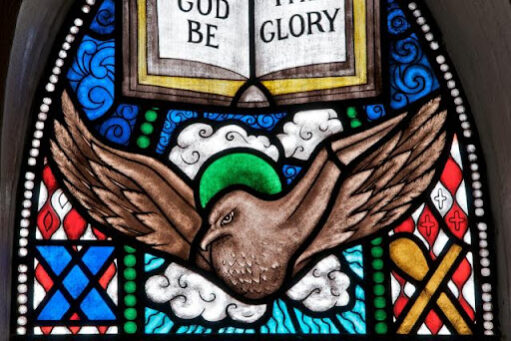
ohn the Evangelist is symbolically portrayed as the eagle. Have you ever wondered why? Nobody could deny that his writing soars to great heights, but it could also be because the eagle is reputed to be the only creature that can look directly into the light of the sun without damaging its eyes. John, more than any scriptural writer, looks into the inner life of the Blessed Trinity. He knows that the human eye could not take the infinite grandeur and light of God … no one has ever seen God. But the light of God is filtered down to our capacity in the flesh of Jesus. To see Jesus is to see God. There is no account of the Transfiguration in John’s Gospel because, as far as John was concerned, every day he lived Jesus revealed the glory of God.
We can see John’s great insights into the Trinity in this Sunday’s Gospel, which is the famous prologue of John. As we begin a new year, it is fitting to see things from the beginning, which is what John describes in his prologue. The evangelist introduces Jesus to us in five stages. First, Jesus is the pre-existing Word. Genesis describes God as “saying” things into life. The Word of God is life-giving. “Through him, all things came to be, not one thing had its being but through him.” Second, Jesus is the revealing Word. The revelation of God reaches its climax in Jesus. “No one has ever seen God; it is the only Son, who is nearest the Father’s heart who has made him known.” Third, Jesus is the Word made flesh. God has spoken to us through the human life of Jesus. As Jesus said to Philip the Apostle, “To have seen me is to have seen the father.” And fourth, Jesus is the inviting Word. His words and works invited people to believe in him and follow his way. Sadly, many rejected him but to all who did accept him, he gave the power to become children of God.