


The narrative Gospel tradition presents Mary Magdalene as the first witness to the resurrection.
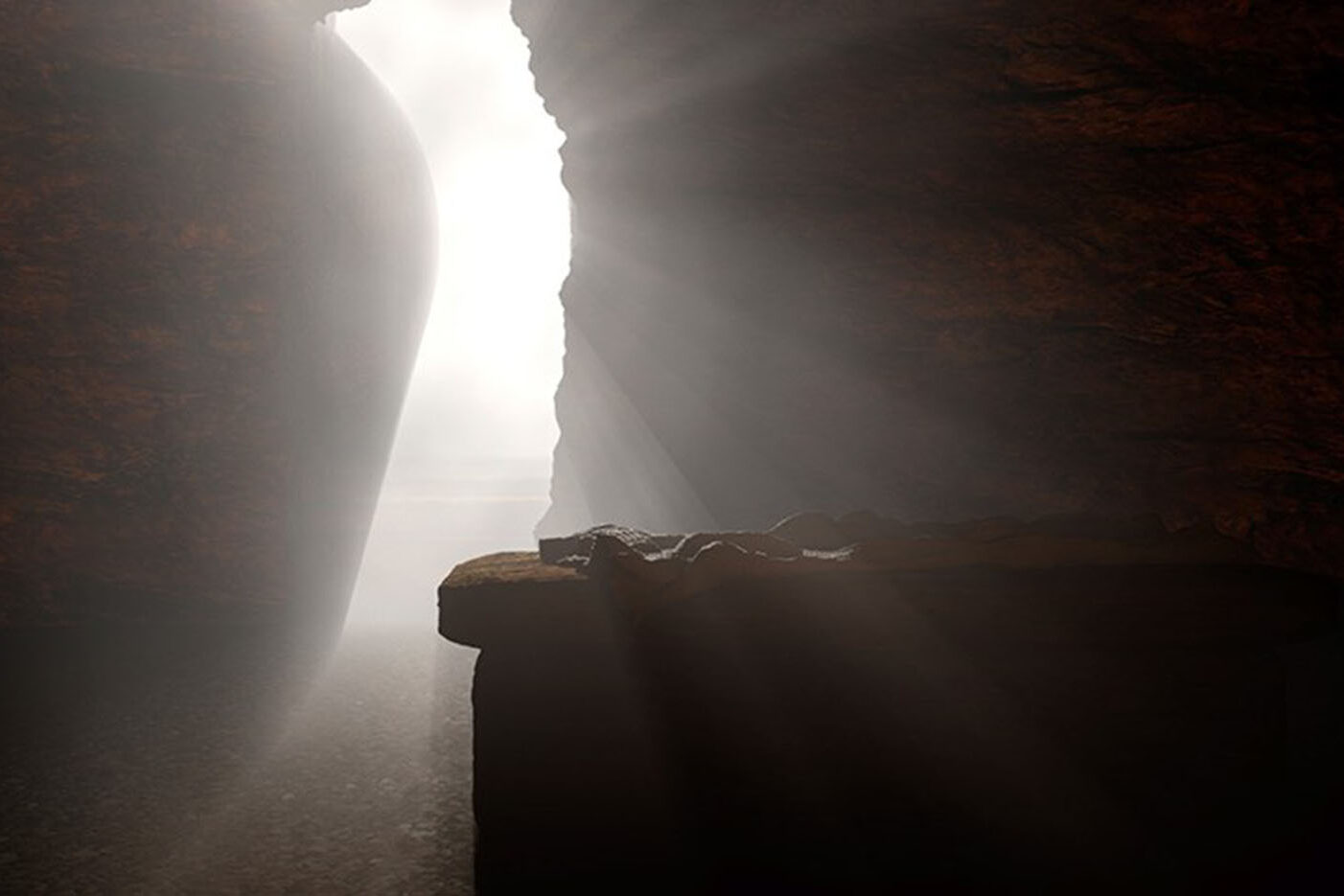
We might note that the Gospel accounts do not say that anyone actually saw Jesus emerge from the tomb. The women are the constant factor in the story of Jesus’ journey of suffering. They witness the crucifixion and the burial; Mary Magdalene and others are mentioned in the various narratives of the discovery of the empty tomb.
The episode today recalls John’s telling of Jesus’ raising Lazarus to life, but there are important and significant differences in the two scenes. First of all, Lazarus’ tomb is still sealed, but that of Jesus is open (leading to questions as to why: Mary does not conclude from the absence of the body that Jesus is risen). In the case of Jesus, his burial cloths are found on the ground and his facecloth rolled up in a separate place: Lazarus appears with his funeral sheets around him.
We might notice that the simple fact of the missing body does not inspire Simon Peter to faith. Peter may well be the leader of the disciples, but it is the one who is closest to Jesus in a relationship of love who understands what has actually happened.
Previous Sunday Messages


REFLECT
Sacred art can be very helpful in thinking about the mysteries of our faith. But sometimes it can offer too simplistic an understanding, especially of the resurrection of Jesus. Apart from the beloved disciple, who stands at the origin of the tradition going back to John, no one comes to believe in the resurrection simply through the fact that Jesus’ tomb is found empty. Mary Magdalene tells Simon Peter and the others that someone has removed the body and she and her companions have no idea what has happened to it.
It is only through a personal encounter with the risen Jesus that people come to believe in the resurrection. They have an experience which convinces them that Calvary and the cross were not the end of the story. Thus, they are witnesses to the resurrection, rather than witnesses of the resurrection. It is on their testimony that the preaching of the Gospel is based: the empty tomb is never advanced as evidence, because it is rather a consequence of what is being proclaimed.
Each Easter, we are invited to renew our faith in the risen Jesus and to affirm his place in our lives. When we are asked, “Do you believe in Jesus Christ… who… suffered death and was buried, rose again from the dead… ?” we should not see our answer as simply a statement of fact, but rather as our annual commitment to our Christian faith and to the person of Jesus.
We are declaring that we are Jesus’ disciples; that he is present to us in our daily life, that we are doing our best to live by his teachings and values, and that this is most present when we celebrate the Eucharist together.
learn
- No one witnessed Jesus rising from the tomb.
- The original witnesses come to believe through a personal encounter with the risen
Jesus. - Mary Magdalene is the constant presence in the resurrection narratives.
- Easter is our opportunity to renew our faith and our commitment to Jesus and the
teachings of the Gospel.
do
Make the sign of the cross privately with water; renew quietly your commitment to the person of Jesus.