


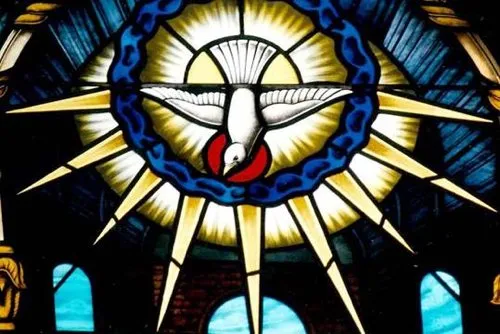
Our reading from Romans and John’s Gospel offer a wonderful description of how the Holy Spirit can directly impact on our lives if we allow this to happen.
St Paul is very clear that the Spirit lives in us and this is not to be questioned. We are after all “heirs of God and coheirs with Christ” and therefore the implication is that the people of God are considered an inextricable part of this unity. The demand for us believers is to live by the Spirit, to live within the Spirit that has been given to us freely. Arising out of our witness to the Spirit, the Spirit will in turn give us life as it gave life to Jesus in raising him from the dead.
Then John’s Gospel presents us with the great promise of Jesus. We no longer should let our hearts be troubled by fear or anxiety for the Spirit has been sent to us by a loving God.
The context for Jesus’ promise of course is the recognition that there are testing times ahead for this group of followers. But the idea of an interactive relationship between God and God’s people is a new one. Up to this point, the faith of the people was very much hierarchical in nature. Staring up into the heavens, prayers were spoken and offerings were made. This Spirit of John’s Gospel encourages a reciprocal relationship between God and all believers: “love our Lord Jesus Christ and God the Father will love you in return”
Previous Sunday Messages


REFLECT
As we await the celebration of Pentecost, we might remember that the giving of the Holy Spirit is the final act in the Easter mystery. The Spirit continues the presence of Jesus among his disciples, and Jesus promised that the Spirit will reveal to us the ever deepening meaning of the teaching of Jesus. At the Eucharist on the Feast of the Ascension, we heard Jesus assure the disciples that he will send to them what the Father has promised.
We may well pray in this time, this novena between Ascension and Pentecost, for a fresh outpouring of the Holy Spirit. But we might be careful what we pray for. The one thing of which we can be certain from the Bible is that the Spirit will not be contained or controlled. The Spirit will not be channelled through church structures or customs and may well speak through the most unlikely of persons. Someone once entitled a book The God of Surprises, and perhaps that is not a bad way of understanding the Holy Spirit.
Many people have important questions about the Church today and we should treat their questions with respect and acknowledge their sincerity. In the Acts of the Apostles, the people listening to the inspired disciples wondered what was going on, since Jesus’ followers could be understood, which means they were making sense to those who heard them and were amazed.
So, by all means, let us ask for a fresh outpouring of the Spirit this coming Pentecost; but at the same time, we might prepare ourselves for what the Spirit might be saying, for it is likely to be a surprise.
learn
- In John’s Gospel, the disciples play no active part in the ministry of Jesus.
- The word “apostle” means “one who is sent”.
- The appearance of Jesus to the disciples after his resurrection is the occasion when they become apostles.
- The forgiving of sins in the Fourth Gospel is connected with baptism: the sacrament of reconciliation is a later development in the church community.
do
Switch on the light or lamp: consider how the bulb is transformed by the electrical current. How might the Holy Spirit transform your life if you truly connect with the Spirit?