


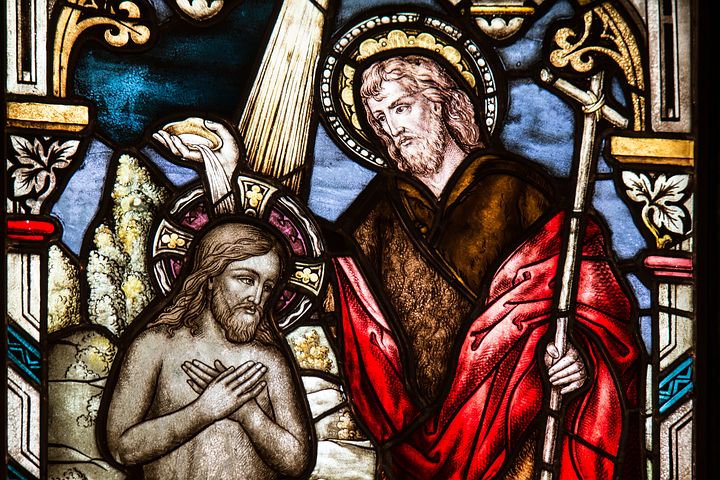
We find mention of Jesus’ being baptised at the beginning of all four Gospel versions. However, this presents a couple of problems, which Luke carefully avoids.
If John the Baptist baptises Jesus, does not this suggest that he is, somehow, greater than the one whom he baptises? Also, may this ritual not suggest that Jesus is a sinner in need of repentance? In the first part of our Gospel reading, John clearly declares himself to be the forerunner to the one more powerful. This person will bring a baptism, not of water, but of the Holy Spirit and of fire, the two elements which we find later in the Lukan writings at Pentecost, the last act of the Easter mystery.
Luke is also, like the other evangelists, beginning the story of Jesus’ ministry. He wants our focus to be on the person and activity of Jesus, so he deftly removes John the Baptist from the narrative. There is room for only one major character on the stage at a time. The office of prophet passes from the Baptist to Jesus. This idea of the prophet will be a major theme in Luke’s Gospel account.
The baptism of Jesus is another epiphany. Luke presents it as a personal, interior experience of Jesus, rather than one addressed to the wider group present. However, we are given a glimpse of this revelation by the author, that Jesus is God’s “Son, the Beloved”. The stage is now set for Jesus to embark on his ministry.
Previous Sunday Messages


REFLECT
Why did Jesus present himself for baptism from John? Luke actually plays down John’s role; he does not give any details about the ritual itself, or who carried it out. He avoids any suggestion that Jesus was guilty of sin which had to be forgiven. So what was the point?
Perhaps the solution to this conundrum might lie in the idea of solidarity. Jesus wished to show that he identified himself with all those people (including ourselves) who want to live a decent human life under the word of God. This means acknowledging shortcomings and intending to do better in future.
The idea of missing the mark¸ of falling short, is at the root of the most common New Testament word for sin. The notion that most Christian people are in open revolt against the will of God by greatly sinning is not implied in falling short. Perhaps by being baptised, Jesus is saying that he is on the side of all those who are doing their best, despite their weaknesses, and that it is this attempt to live up to the ideals of the Gospel that is more important. One feature of ideals is that they are usually (just?) out of reach, but it is the effort to live up to them that is most important. If we fail, it is not the end of the world: this seems to be what Jesus kept striving to tell people throughout his ministry. So let’s keep trying!
learn
- The baptism of Jesus is an epiphany: he is revealed as the Son of God.
- The word epiphany means showing or revealing: the event tells us something about who Jesus really is.
- The four Gospel narratives properly begin with the figure and ministry of John the Baptist.
do
Put some water in a bowl: make the sign of the cross with it and renew your own baptismal commitment to God in Jesus