


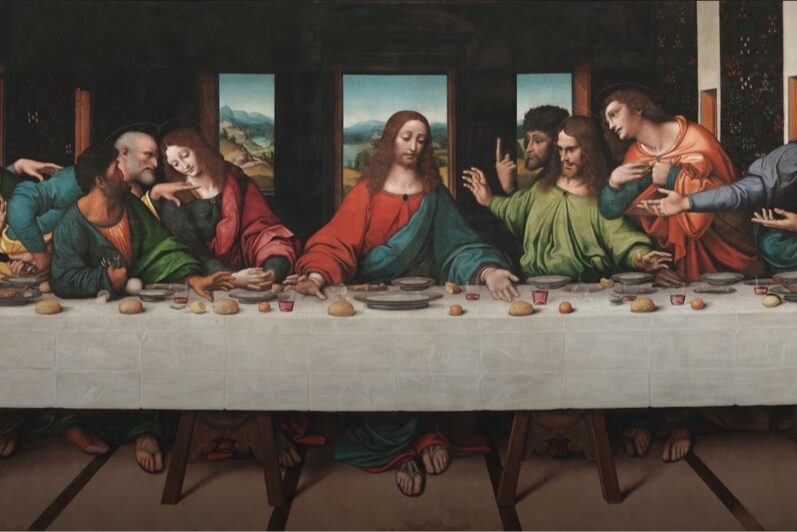
In the Gospel according to John, there is no account of the institution of the Eucharist at the Last Supper as we find in the versions of the Synoptic writers Mark, Matthew and Luke. The Eucharistic text is that of the feeding of the crowds. At John’s Last Supper scene, the symbolic act is the washing of the disciples’ feet.
In the other accounts, Jesus talks about the new covenant. Part of the covenant ritual was the imposing of commandments and, in our Gospel text today, Jesus tells the disciples that he is giving them a new commandment, which suggests the idea of a new covenant. This instruction will demand a great deal of those who accept the new relationship with God – it is to love one another, just as Jesus has loved them – but the message is directed also at those reading or listening to the Gospel.
God will be glorified in the crucifixion of Jesus, where God’s love for the world will be finally revealed and Jesus will leave his disciples in the form that they have known him up to now. However, their being his disciples will continue, and the sign of this will be their love for one another. This will be the best witness to those among whom they live.
Previous Sunday Messages


REFLECT
Easter is the time when we are invited to reflect on our actual relationship with the risen Jesus. For the rest of the Church’s year, we are presented with Jesus’ ministry and can draw lessons from that, but the Gospel of John can be more difficult, as it makes demands on us personally. At the Paschal vigil, we are asked to declare what we believe, and this can be a rather simple thing to do, to answer some questions. But when we are told that our relationship with Jesus will require some personal examination of ourselves, and possibly subsequent change, this can be a lot more demanding, even threatening. This is not a matter of how we behave, but of the person we are, our attitude to Jesus and to each other.
During the Last Supper in John’s account, Jesus says to those at table with him, “I call you friends.” In one of the themes of the fourth Gospel, this means that his disciples’ training is complete, and today’s reading represents an important step in that process – the giving of the new commandment, which is a sign of the new covenant between God, Jesus and the disciples. If we are to be true disciples, then we have to take this teaching of Jesus seriously.
The history of the Church can make it difficult for people to accept the message of Jesus. We have the persecution and burning of those whose opinions do not square with official doctrine; there are religious wars and bitter divisions between Christian denominations.
Perhaps we might reflect on what witness we ourselves are giving today and that Jesus is not giving us advice, but a commandment.
learn
- There is no institution of the Eucharist in John’s account of the Last Supper.
- Jesus’ self-giving is expressed there in his washing of the disciples’ feet.
- The giving of the new commandment forms part of the making of the new covenant.
- It is the disciples’ relationship with one another which will be the most effective sign
of their belief in Jesus.
do
Are you at odds with any other disciple in your community? Think about what you can do to sort it out, in light of the teaching of Jesus