


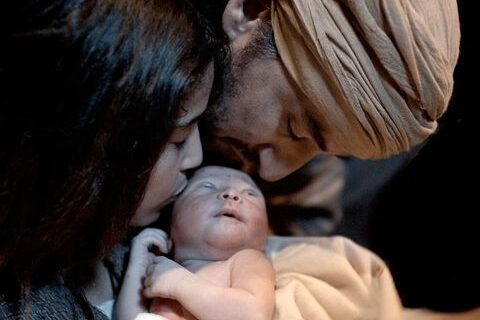
The stories on which we have been reflecting over the past few weeks from the accounts of Matthew and Luke focus on the conception and birth of the Son of God.
The writer of the Fourth Gospel, whom we usually call “John”, begins his presentation of Jesus and his message with a profound reflection on the mystery of the Word which existed with God from the very beginning and took flesh as a human being in the person of Jesus. The evangelist expressed this as “pitching his tent among us”. But why? Jesus is God’s Word, God’s invitation to human beings to accept their true nature as children of
God. This is an offer, not a demand. Throughout Israel’s history, God reached out to the people, offering a covenant, a relationship of sharing life and love, not for any merit on their part, but simply out of God’s free choice. When the people fell short in their living out of the covenant, God always offered the chance of being forgiven and renewing the bond.
In the person of Jesus, we see God’s ultimate offer of such a relationship: not one of duty orobligation, but a free response on our part to what God has done for us in reaching out in this way. God is presenting us with a gift: it is up to us to accept or refuse it on an ongoing basis, not just once and for all.
REFLECT
Christmas is very much a time for giving presents. Most homes have a tree under which the brightly wrapped gifts are laid awaiting the excitement of being opened on Christmas Day. Gifts are important, not necessarily
because of what they are but because of what they mean. If we suspect that someone is giving us a present out of a sense of obligation, then the object itself will not be of much interest to us. But if we realise that something, maybe apparently of little objective value, is an expression of love and affection, then it is something we are likely to treasure for a long time.
Today, we celebrate God’s greatest gift to us, that of God’s love in the person of Jesus. This is not a gift that we are supposed to put away safely in a cupboard and bring out every Christmas and Easter, but one which should be part of our daily life, a gift that we refer to as our faith. The old Catechism described faith as “a response to revelation”: at the feast of the Nativity (the birth) of the Lord, we are again presented with God’s
clearest statement of the Word, and we are invited to respond once more as grateful disciples of Jesus.
Our faith is not something static, a set of statements which we recite in the Creed: it is a living, developing relationship with the Lord. If we think of it as a gift, it is more like a plant than a picture. Or we might think of it as a Russian doll: each time we open it, there is another one inside, but we have to open it to discover the next layer. As we look at the Christmas crib scene, we might remember that we are being invited to become part of the mystery which we contemplate.
LEARN
There is no infancy narrative, no story of the conception and birth of Jesus, in the Gospel according to John. Jesus as the Word of God corresponds to the female figure of Wisdom in the Jewish
Hebrew and Greek scriptures. The feast of Christmas replaced the pagan Roman festival of Saturnalia: that is why it is celebrated in December.
SAY
Thank you, God, for the gift of your Word to me.
DO
As you unwrap your present, think of the person who gave it to you and their reason for doing so. Then remember Jesus in the crib as God’s present to you and God’s reason for sending you this gift.