


Our Gospel passage today is one very familiar to us all. It consists of the opening verses of the Fourth Gospel and presents the incarnate Word of God in terms reminiscent of the figure of Wisdom in the Hebrew scriptures.
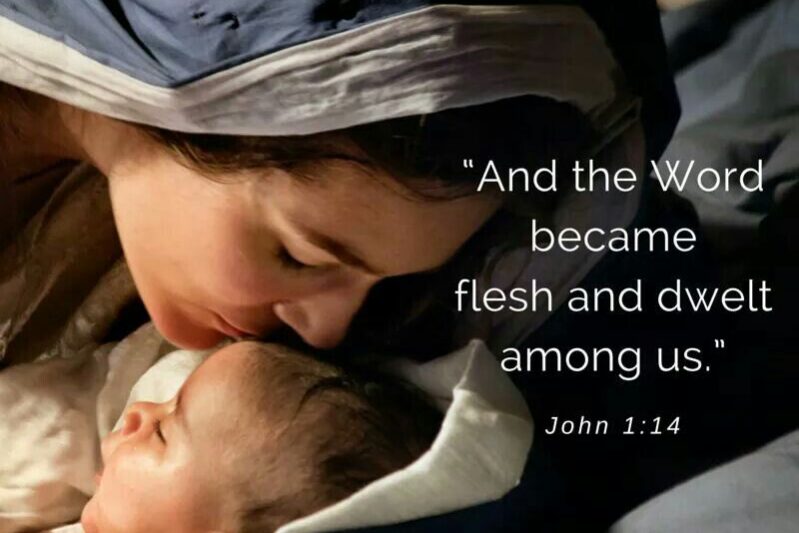
The Word was with God in the beginning and was God’s agent in creation. The themes of light, life, believing, glory and truth will all feature prominently in the Johannine narrative. The sentence which is particularly significant for us at this time of Christmas is “The Word was made flesh, he lived among us.” There can be no stronger affirmation of the dignity of human nature than this, to say that God entered our world as one of us.
Word implies communication. The Christmas mystery is all about God reaching out to human beings in the most radical way imaginable. God is offering the chance of an intimate relationship. However, John’s Prologue acknowledges that not all people will accept the Word, and that Jesus is rejected is another major theme in the story. Ultimately, everyone has to make a choice and on this judgement hangs. But at this time, the liturgy is asking us to consider the length to which God was prepared to go in reaching out to human beings. The crib is the artistic illustration of this belief.
Previous Sunday Messages


REFLECT
Another important theme in John’s Gospel account is that of Jesus as the revealer of God. God’s purpose in revelation is to invite human beings, such as ourselves, into relationship that is characterised as friendship. This is the activity of Wisdom in the Hebrew scriptures and which Jesus carries out in his ministry.
A couple of years ago, a team of young footballers was trapped by rising flood water in a cave in Thailand. Their coach kept them calm until rescuers arrived by helping them to meditate. Someone remarked that they were Buddhists, so there were accustomed to meditating: this implied that Christians would not do the same. But there is an ancient Christian tradition of meditation or mental prayer, which helps to bring us into contact with God and to see our life. in a proper perspective.
Perhaps the best way of considering our Gospel passage today might be to take it and reflect on it slowly and quietly and let it speak to us. It tells of the existence of the Word before the incarnation, of the Word’s part in creation and of glory being revealed, which will happen at Cana in Galilee and on the cross.
The Word addressed to us looks for a response and the Prologue foretells the double answer from human beings. One purpose of the liturgy is to help us grow in our appreciation of our faith and what it should mean in our daily life. If our Christmas devotions leave us at a sentimental level about the infant Jesus, they are not helping us develop an adult belief in God and God’s place among and within us. It is worth meditating on this reading”
learn
- The Logos (Word) in the Prologue to the Gospel according to John corresponds to the female figure of Wisdom in the Hebrew scriptures.
- The Fourth Gospel presents Jesus as conscious of his existence with God before his human birth.
- The Prologue says, in some translations, that the Word “pitched his tent among us”.
do
Read John 1:1-18 (or the shorter version in your Missal or Mass book) quietly and let the text speak to you. This is one form of meditation.