


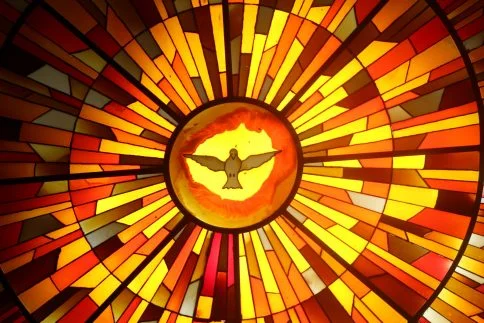
We have celebrated the Feast of the Ascension, so we are now in the in between time, awaiting Pentecost. The Gospel reading for our Eucharist today comes from the section of John’s version, which is often referred to as the ‘Priestly Prayer of Christ’.
Jesus is at table with those who have accompanied him in his ministry, but they played no active part in helping him or being delegated by him to share in his work. Jesus now prays for them and for all those who will come to believe through their future apostolate of spreading Jesus’ word.
By making God known to the disciples, Jesus is offering them something more, a share in the oneness which is to be found between himself and the Father. This should manifest itself in the unity which exists among believers who have accepted Jesus’ teaching. But this unity among disciples should have an effect on the wider community: it should bring other people to believe in Jesus and his message.
In biblical tradition, God was revealed in glory, chiefly through the Law, but now the supreme way of this happening is in the person of Jesus. In the future, this revealing will take place through the unifying love which the disciples have for one another, which should reflect the love which exists between Jesus and the Father.
Previous Sunday Messages


REFLECT
As we await the celebration of Pentecost, we might remember that the giving of the Holy Spirit is the final act in the Easter mystery. The Spirit continues the presence of Jesus among his disciples, and Jesus promised that the Spirit will reveal to us the ever deepening meaning of the teaching of Jesus. At the Eucharist on the Feast of the Ascension, we heard Jesus assure the disciples that he will send to them what the Father has promised.
We may well pray in this time, this novena between Ascension and Pentecost, for a fresh outpouring of the Holy Spirit. But we might be careful what we pray for. The one thing of which we can be certain from the Bible is that the Spirit will not be contained or controlled. The Spirit will not be channelled through church structures or customs and may well speak through the most unlikely of persons. Someone once entitled a book The God of Surprises, and perhaps that is not a bad way of understanding the Holy Spirit.
Many people have important questions about the Church today and we should treat their questions with respect and acknowledge their sincerity. In the Acts of the Apostles, the people listening to the inspired disciples wondered what was going on, since Jesus’ followers could be understood, which means they were making sense to those who heard them and were amazed.
So, by all means, let us ask for a fresh outpouring of the Spirit this coming Pentecost; but at the same time, we might prepare ourselves for what the Spirit might be saying, for it is likely to be a surprise.
learn
- Pentecost was originally a Jewish feast: the name means ‘fiftieth’, referring to the days since the feast of Passover:
- It was a spring grain harvest festival: there were two harvests in the year, the other in the autumn.
- Many Jewish feasts originated in harvest celebrations.
- Passover combined a shepherd’s rite, represented by the lamb, and a farmer’s celebration, seen in the use of unleavened, that is pure, bread.
do
Turn on an electric light: see how the invisible power transforms the everyday objects of metal and glass. Think how the Holy Spirit could transform you – if you were willing.