


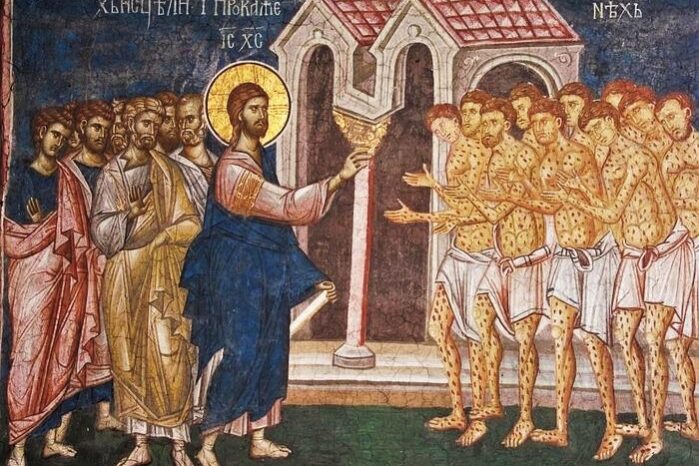
In the Gospel tradition, there is one example of Jesus healing someone who is suffering from the condition known as leprosy.
The term covered a wide range of skin complaints from the wasting disease of that name to the relatively harmless (though unfortunate) condition of eczema. People with that illness found themselves excluded from normal life in society as others regarded them as a danger because of the infectious nature of their ailment. Illness was also often regarded as a punishment for sin, so such individuals were consigned to a kind of “living death”, and to be cured of leprosy was seen as equivalent to being raised from the dead: it required God to act.
It is against this background that we might understand the story in today’s Gospel. The afflicted person’s request is a statement from Mark about Jesus’ identity: the expression “if you want to” really means “if you have the power”. The human aspect of Jesus is brought to the fore when he is shown as being deeply moved and physically touching the infected one in front of him, thus technically contracting the condition of ritual uncleanness himself. By doing so, Jesus does away with the barrier between what is holy and what is not. Jesus observes the teaching of the Holiness Code of the book of Leviticus by telling the cured person to fulfil the prescriptions of the Law. He imposes silence on him at the same time, an instruction which the man immediately disregards: we will find this pattern frequently in Mark’s narrative.
REFLECT
There are some interesting paradoxes in today’s Gospel episode. Mark implies that Jesus has divine power in that he can cure the person suffering from leprosy, but then tells us that Jesus is moved to the depths of his being by feeling compassion for him. Jesus tells the man to observe the stipulations of the Law of Moses, but he himself has no compunction in setting aside the strict rules in the same Law about avoiding contact with a person suffering from leprosy, to the extent of touching him with his hand. Jesus gives the healed man an instruction not to talk about what has happened, an order which he cheerfully ignores and so Jesus’ fame rapidly spreads.
We find in this story the tension between the Law and the good of the individual person, which the evangelists often present through incidents which take place on the sabbath. Jesus sees the need of the person in front of him and responds to that, rather than simply imposing the letter of the Law. The purpose of the Law was to help people live close to God, but it could become a barrier, if people regarded it as an end in itself. The Gospel presents us with standards which apply to the Church today. If we are overly concerned with the letter of the Law, we are in danger of forgetting what the Church is all about, namely to enable Jesus to touch people’s lives.
SAY
Lord, we come to you seeking wholeness.
(Carey Landry)
LEARN
- The term “leprosy” covered all sorts of skin ailments, even less serious, non-infectious types.
- The person suffering from leprosy was not only physically affected, but socially excluded from normal contact with others: they endured a kind of “living death”.
- The stories of Jesus healing physical illness are illustrations of the deeper healing of the whole person.
DO
There are organisations which help children who suffer from disfiguring ailments which prevent them from living a full, social life, just like the person suffering from leprosy in our Gospel reading. Consider sending a
donation to support them.