


In our Gospel extract today, we are given examples of the preaching of John the Baptist. He was someone who attracted a great following, including civic officials and members of the armed forces.
Luke presents John as a person of great importance, with an urgent message: however, he is not the main character in the Gospel story. Throughout the Infancy Narrative, the evangelist showed him as occupying a lesser place to that of Jesus, and in our reading today, John explicitly rejects any suggestion that he himself might be the Messiah. He compares the baptism he offers with that of Jesus: John’s comes through water; that of Jesus comes through the Holy Spirit and fire, which will be fulfilled, in Luke’s writings, at Pentecost. Furthermore, John describes himself as an unworthy servant of the one to come, unfit to untie the laces of his sandals.
Previous Sunday Messages


REFLECT
The execution of John the Baptist is recounted by Mark, in graphic and well-known detail, as the result of his denouncing Herod Antipas for marrying Herod’s sister-in-law. But the first part of our reading today suggests another, probably more historically accurate reason. Among those who responded positively to John’s preaching were tax collectors and soldiers. These were the officials on whom the smooth running of the state depended. If the Baptist were seen as having influence on such people, then he could be perceived as an alternative centre of power and so a threat to the central government. This would be a more plausible reason for John’s being imprisoned and executed than his criticising the domestic arrangements of the local ruler, who could easily ignore his comments.
John the Baptist is an uncomfortable figure, very much in the mould of the Old Testament prophets. There are not often statues of the Baptist to be found on sale in repositories. The prophets were suspicious and critical of institutional religion because, to them, it lulled people into a false sense of security: if someone fulfilled their religious duties, then they could consider themselves as being at rights with God, but the prophets taught that deeper values were – and are – at stake. So when John the Baptist called for repentance, he was in the line of the Hebrew and Israelite prophets and this is the message of Jesus, when he embarks on his ministry.
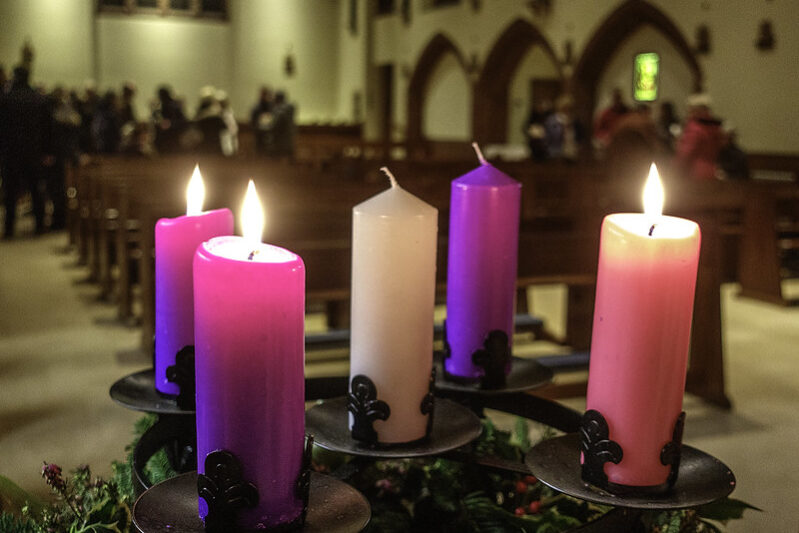
Who are the prophets today? It is tempting to think that the Holy Spirit works through the channels of the official Church, but this is not the message of the Jewish and Christian scriptures. John the Baptist was not a member of the official clergy, nor was Jesus, and their comments on the Temple and other religious authorities of their day make uncomfortable reading if we apply them to the present day. But “the word of the Lord stands for ever”: there is a saying that the Church is always in need of reform. In Advent, during which John the Baptist is so prominent, we might reflect on that and listen to the other voices.
learn
- John the Baptist attracted followers from tax collectors and soldiers.
- These were important figures for the efficient functioning of the state.
- Therefore, the Baptist could be perceived as a threat to the central government and this may have been the reason for his arrest and subsequent execution
do
Put out the crib figure of Joseph from your crib set: reflect on the response of Joseph as a young man to the call of the Lord.